Sungai Nil
Jika tidak ada Nil, maka tidak ada Mesir. Ungkapan ini nampaknya realistis sekali, mengingat betapa bergantungnya Mesir kepada sungai Nil dalam berbagai bidang, khususnya masalah pengairan. Bahkan boleh dibilang bahwa Mesir merupakan negeri yang peradabannya dibangun dengan sungai Nil. Ahli sejarah Yunani, Herodotus, menyebut Mesir sebagai "anugerah Sungai Nil".
***
HULU-HILIR
Mesir, adalah termasuk satu dari sembilan negara yang dilalui oleh sungai Nil. Delapan negara lain yang menjadi negara Basin (lembah) sungai Nil adalah, Tanzania, Kenya, Zaire, Uganda, Ethiopia, Sudan, Rwanda dan Burundi. Yang dimaksud dengan basin (lembah) sungai Nil adalah seluruh daratan yang dilalui sungai ini, atau yang dilalui sungai-sungai yang bermuara di sungai ini, serta cabang-cabang sungai yang mendapat air dari sungai Nil. Dengan demikian lembah sungai Nil sangat luas sekali, sehingga mencapai 2,9 juta meter persegi atau sekitar 1/10 luas Benua Afrika. Di antara kesembilan negara lembah ini terbagi menjadi dua kelompok. Pertama, kelompok negara sumber sungai (hulu) Nil, dan kedua, negara pembuangan (hilir) sungai. Dalam hal ini, Mesir dan Sudan adalah dua negara hilir sungai Nil, sementara sisanya adalah negara sumber (hulu) sungai.
Sungai Nil, memiliki kelebihan tersendiri dibanding sungai-sungai lain di dunia. Di samping panjangnya mencapai 6.670 KM membentang dari selatan ke utara, juga membentang pada garis 3, 30 derajat lintang selatan, sampai 31derajat lintang utara, atau dengan kata lain bahwa sungai ini memotong lebih dari 34,5 derajat garis lintang. Inilah yang membedakan Nil dengan sungai-sungai lainnya di dunia, karena kebanyakan sungai di dunia mengalir ke arah timur atau ke barat. Di samping itu, sungai Nil merupakan sungai yang mengalir melalui daerah-daerah yang beragam dan dengan iklimnya yang bermacam-macam pula.
Di daerah hulu, sungai Nil bersumber dan mengalir dari daerah yang beriklim tropis dan berdataran tinggi. Kemudian melewati beberapa sumbernya yang lain di daerah semitropis. Lalu melewati daerah lembah pegunungan yang beriklim subtropis. Dari arah Ethiopia yang beriklim sub-seasonal, salah satu sumbernya mengalir. Kemudian sungai Nil melewati daerah Sudan yang merupakan daerah yang penuh dengan hujan musim panas dan kekeringan musim dingin. Setelah itu menerobos membelah daerah padang pasir yang ganas, dan bermuara di daerah Mesir yang beriklim laut tengah. Berarti sungai Nil mengalir dari daerah hijau yang terletak pada garis katulistiwa ke daerah padang pasir yang sangat tandus di bagian utara benua Afrika. Dengan begitu, setiap Nil mengalir satu langkah, dia akan kehilangan sebagian airnya. Jadi semakin ke hilir, airnya semakin berkurang. Hal ini berbeda dengan sungai-sungai lain di dunia, di mana semakin ke hilir semakin banyak muatan airnya.
Lalu dari mana sumber sungai Nil itu? Pertanyaan inilah yang mendorong para ilmuwan dan petualang dari berbagai masa dan zaman untuk mencari sumber-sumber sungai Nil. Sejak Zaman Mesir kuno, orang-orang Mesir banyak yang berusaha untuk mengetahui sumber-sumber sungai ini. Tidak ketinggalan orang-orang Yunani kuno, seperti Herodotus yang pada tahun 457 SM, melakukan ekspedisi mencari sumber sungai Nil dan mendapatkan sumber bagian barat. Begitu juga halnya dengan Ptolomeus, yang mampu menemukan sumber bagian selatan, dan dianggap sebagai ahli geografi terbesar di zamannya yang mampu menggambarkan sungai Nil dengan sangat cermat dan akurat. Sumber bagian tengah sendiri ditemukan oleh orang-orang Arab, semisal al Bakbasyi al Mashry Salim Qabthan. Kemudian sumber dari Negeri Habasyah (Ethiopia) ditemukan oleh James Bross, seorang petualang Skotlandia. Danau besar Victoria, yang juga salah satu sumber terbesar ditemukan oleh Spake. Dan danau Albert, ditemukan oleh Samuel Bekker, serta Danau Edward dan sebagian sungai Smileky ditemukan oleh Stanley, seorang petualang Inggris.
Dengan demikian berarti sumber sungai Nil tidak hanya satu, tapi Nil adalah merupakan tumpahan air dari beberapa sungai dan beberapa danau. Tepatnya, Nil bersumber dari sungai Kagera yang mengalir masuk ke danau Victoria dari arah barat. Sungai Kagera bisa dikatakan sebagai permulaan bagi sungai Nil dan danau Victoria merupakan danau terbesar pertama di benua Afrika, dan kedua di dunia setelah danau Superior di Amerika utara. Kemudian dari danau ini, masuk lagi ke ke danau Kyoga dan danau Albert. Sungai yang membawa air dari Victoria ke danau Albert ini disebut dengan Nil Victoria. Sementara itu, danau Albert juga mendapat saluran air dari danau Edward melalui sungai Smileky. Di danau Albert lah, kedua aliran air yang berasal dari danau Victoria dan danau Edward berkumpul. Dari danau Albert, mengalir satu-satunya sungai yang disebut Nil Albert. Di saat Nil Albert ini mengalir dan seakan sudah kehabisan tenaga dan air lagi, datanglah kekuatan baru, yaitu sungai Subath yang ikut membantu mensuplay air bagi sungai Nil. Sungai Subath sendiri mendapat suplay airnya dari beberapa sumber seperti sungai Baro di Ethiopia, dan aliran air dari danau Rudolf di Kenya. Sungai Nil, dari titik pertemuan antara Nil Albert dengan sungai Subath ini disebut Nil putih.
Selanjutnya Nil putih mengalir sampai ke ibu kota Sudan, Khartoum, dan di sana bertemu dengan Nil biru yang bersumber dari Danau Tana dan sungai Athirah. Berkat pertemuan antara dua sungai inilah, maka sungai Nil mendapat bantuan air lagi sehingga dapat melanjutkan alirannya sampai ke laut tengah. Bahkan Nil biru dianggap sebagai nyawa baru bagi sungai Nil putih yang semakin lemah setelah menempuh berkilometer-kilometer jarak. Bisa dikatakan bahwa sungai Nil setelah kota Khartoum sampai ke dataran Mesir, lebih banyak merupakan kelanjutan dari sungai Nil biru ketimbang Nil putih.
SUBUR
Semenjak dahulu kala, Sungai Nil merupakan faktor pendukung pertama dalam membangun peradaban Mesir kuno. Tidak ada bangsa di dunia yang hidup dan eksistensinya betul-betul sangat tergantung kepada sungai, kecuali bangsa Mesir. Mesir yang sebagian besar tanahnya terdiri dari padang pasir tandus, berkat adanya sungai Nil, tanah ini berubah menjadi subur dan bisa ditanami.
Pada akhir bulan Juni, dengan sangat teratur, Sungai Nil hilir membesar arusnya akibat hujan tropis dan salju gunung yang mencair di daerah hulu sungai, sehingga airnya naik ke lembah-lembah dan bantaran sungai. Pada akhir bulan September, seluruh bantaran menjadi seakan danau yang keruh. Dan ketika surut airnya kembali seperti semula pada akhir Oktober, air sungai Nil menyisakan endapan subur di bantaran dan lembah tadi. Di saat itulah daerah lembah dan bantaran sungai Nil menjadi siap untuk ditanami dengan berbagai macam tanaman. Bulan Januari sampai Mei merupakan saat di mana air sungai Nil surut.
Untuk betul-betul menggunakan sungai Nil dengan sebaik-baiknya, masing-masing dari sembilan negara telah melakukan eksploitasi sungai ini dengan semaksimal mungkin, sehingga kebutuhan negara dan rakyatnya terhadap air dapat terpenuhi dengan baik. Lain halnya dengan Mesir dan Sudan, ketujuh negara lembah Nil tidak terlalu mengandalkan sungai Nil sebagai sumber hidupnya. Karena ketujuh negara tersebut merupakan negara-negara yang masih secara teratur mendapatkan curahan hujan yang cukup setiap tahun. Mesir sendiri dalam mensiasati penggunaan air sungai Nil, berusaha semaksimal mungkin agar air sungai Nil ini dapat dimanfaatkan dengan baik serta kelestarian dan kejernihan air sungai tetap terjaga. Beberapa proyek besar untuk memperbaiki sistem pengairan telah banyak yang diselesaikan Mesir, seperti proyek pembangunan Qanathir, saluran-saluran air, dan pembuatan cabang-cabang sungai ke beberapa daerah yang membutuhkan air. Sementara itu, untuk menghindari air sungai Nil terbuang begitu saja di laut tengah, maka Mesir telah membangun beberapa bendungan seperti, bendungan Aswan yang dibangun pada tahun 1902, bendungan Jabal al Auliya' yang dibangun di daerah Sudan pada tahun 1937, dan bendungan tinggi (al Sadd al 'Aliy) yang mulai dibangun pada tahun 1960 dan rampung pembangunannya di tahun 1970.
Bendungan tinggi ini di samping untuk menyimpan air sungai Nil jika mengalami surut, juga diproyeksikan untuk melindungi Mesir dari bahaya bencana banjir seperti puncaknya pernah terjadi pada tahun 1946 dan tahun 1964. Meskipun Mesir memiliki Bendungan Aswan untuk memenuhi kebutuhan negeri itu akan air, lokasi geografis Mesir yang terletak di bagian paling hilir membuat negeri itu menjadi amat rentan terhadap berbagai kemungkinan.
BERGANTUNG
Sembilan negara lembah sungai Nil, tidak selamanya sepakat dalam pembagian hak terhadap sungai Nil, khususnya hak yang menyangkut jatah dan porsi masing-masing, apalagi semenjak kebutuhan terhadap sungai ini begitu meningkat. Hal semacam ini kadang dapat menyebabkan terjadinya konflik. Konflik terbesar muncul antara pengguna air di bagian hulu dan pengguna air di bagian hilir. Negara yang berada di hulu sungai mengklaim hak kedaulatan atas air yang berasal dari teritorialnya, termasuk hak untuk menggunakan, menyimpan, mengalihkan, dan mencemari. Sementara negara-negara yang dilalui sungai itu, yang semakin ke hilir, semakin kecil posisi tawarnya, menuntut agar air sungai itu dijaga kealamiannya, supaya kebutuhan akan sumber air bersih tetap bisa dipenuhi. Tidak berlebihan kalau Menteri Luar Negeri Mesir pada tahun 1989, Boutros Boutros Ghali, yang kemudian menjadi Sekretaris Jenderal PBB, menyatakan keamanan nasional Mesir terletak di tangan delapan negara Afrika lainnya yang berada di lembah Sungai Nil.
Untuk memecahkan masalah ini, telah dilangsungkan beberapa muktamar negara-negara sungai Nil dengan harapan, kesembilan negara itu tidak ada yang menjadi lebih berwenang atau yang haknya diabaikan. Walau begitu, awal bulan Maret 2004, Tanzania, sebagai salah satu negara hulu sungai Nil menghendaki peninjauan ulang kembali terhadap pembagian jatah dan porsi masing-masing, khususnya jatah Mesir dan Sudan. Tanzania menghendaki jatah pertahun Mesir dan Sudan dikurangi dari porsi semestinya. Menurut perjanjian tahun 1929 antara Mesir dan Inggris, diputuskan bahwa jatah Mesir dari air sungai Nil adalah 59 milyar meter kubik/tahun, dan jatah Sudan 15 milyar meter kubik/tahun. Akan tetapi Tanzania meminta agar jatah ini dikurangi lagi. Pertimbangannya, karena Tanzania sekarang tengah membangun proyek pembuatan saluran air di negaranya. Tentunya dalam hal ini Mesir tidak rela melepaskan begitu saja haknya, mengingat semakin pesat pertumbuhan penduduk Mesir, di satu sisi kebutuhannya semakin besar terhadap air.
Akhirnya Mesir, melalui menteri pengairannya, Mahmoud Abu Zaid, memberikan ultimatum bahwa Mesir tidak akan pernah melakukan konsesi dan memberikan haknya dalam penggunaan air Nil. Entah bagaimana nasib kita yang tinggal di bumi Mesir, jika jatah Mesir dikurangi? Bagaimanapun, pada akhirnya, yang dapat mengeksploitasi dan mengontrol sungai Nil dengan sebaik-baiknya adalah yang akan berkuasa.
Sungai Amazon
Sungai Amazon (bahasa Spanyol: Río Amazonas, bahasa Portugis: Rio Amazonas) adalah sungai di Amerika Selatan yang merupakan sungai terpanjang kedua di dunia – Sungai Nil di Afrika merupakan yang terpanjang. Sungai Amazon memiliki total aliran terbesar dari sungai manapun, membawa lebih dari Sungai Mississippi, Nil, dan Yangtze digabungkan. Amazon juga memiliki sistem peraliran terbesar dari seluruh sistem sungai. Meskipun Nil sungai terpanjang, namun Amazon bisa dianggap "terkuat" (dilihat dari jumlah air yang mengalir per detik).
Jumlah air tawar yang dilepas ke Samudra Atlantik sangat besar: 184.000 m³ per detik (6,5 juta kaki³) di musim hujan. Aliran Amazon merupakan seperlima dari jumlah seluruh air tawar yang masuk ke laut di seluruh dunia. Air di laut dekat sungai ini memiliki kadar garam yang rendah sampai beratus mil jauhnya.
Sungai utamanya (biasanya memiliki lebar satu sampai enam mil) dapat dilalui untuk kapal uap samudra besar sampai Manaus, hampir 800 mil ke hulu sungai dari mulutnya. Kapal laut yang lebih kecil dengan berat 3.000 ton dan 5,5 m (18 kaki) dapat mencapai sejauh Iquitos, 3.700 km (2.300 mil) dari laut. Kapal sungai kecil dapat mencapai 780 km (486 mil) lebih jauh sampai Achual Point. Lewat dari sana, hanya perahu kecil yang dapat naik sampai Pongo de Manseriche, di atas Achual Point.
Sungai ini mengambil air dari koordinat 5° LU sampai 20° LS. Sumber paling jauh ditemukan di dataran tinggi inter-Andes, jarak yang cukup dekat dengan Samudra Pasifik; dan setelah menempuh jarak 7.200 km (4.800 mil) melalui pedalaman Peru dan melewati Brasil, ia masuk Samudra Atlantik di katulistiwa.
Danau Toba
Danau Toba adalah sebuah danau vulkanik dengan ukuran luas 100km x 30km di Sumatera Utara, Sumatera, Indonesia. Di tengah danau ini terdapat sebuah pulau vulkanik bernama Pulau Samosir.
Danau Toba sejak lama menjadi daerah tujuan wisata penting di Sumatera Utara selain Bukit Lawang dan Nias, menarik wisatawan domestik maupun mancanegara.
Asal-usul
Diperkirakan Danau Toba terjadi saat ledakan sekitar 73.000-75.000 tahun yang lalu dan merupakan letusan supervolcano (gunung berapi super) yang paling baru. Bill Rose dan Craig Chesner dari Michigan Technological University memperkirakan bahwa bahan-bahan vulkanik yang dimuntahkan gunung itu sebanyak 2800km3, dengan 800km3 batuan ignimbrit dan 2000km3 abu vulkanik yang diperkirakan tertiup angin ke barat selama 2 minggu.
Kejadian ini menyebabkan kematian massal dan pada beberapa spesies juga diikuti kepunahan. Menurut beberapa bukti DNA, letusan ini juga menyusutkan jumlah manusia sampai sekitar ribuan saja.
Setelah letusan tersebut, terbentuk kaldera yang kemudian terisi oleh air dan menjadi yang sekarang dikenal sebagai Danau Toba. Tekanan ke atas oleh magma yang belum keluar menyebabkan munculnya Pulau Samosir.
Gunung Krakatau
Krakatau adalah gunung berapi yang masih aktif dan berada di Selat Sunda antara pulau Jawa dan Sumatra. Gunung berapi ini pernah meletus pada tanggal 26 Agustus 1883. Letusannya sangat dahsyat dan tsunami yang diakibatkannya menewaskan sekitar 36.000 jiwa. Sampai tanggal 26 Desember 2004, tsunami ini adalah yang terdahsyat. Suara letusan Gunung Krakatau sampai terdengar di Alice Springs, Australia dan Pulau Rodrigues dekat Afrika, 4.653 kilometer. Daya ledaknya diperkirakan mencapai 30.000 kali dari bom atom yang meledak di Hiroshima dan Nagasaki di akhir Perang Dunia II.
Letusan Krakatau menyebabkan perubahan iklim global. Dunia sempat gelap selama dua setengah hari akibat debu vulkanis yang menutupi atmosfer. Matahari bersinar redup sampai setahun berikutnya. Hamburan debu tampak di langit Norwegia hingga New York.
Ledakan Krakatau ini sebenarnya masih kalah dibandingkan dengan letusan Gunung Toba dan Gunung Tambora, di Indonesia, Gunung Tanpo di Selandia Baru dan Gunung Katmal di Alaska. Namun gunung-gunung tersebut meletus jauh di masa populasi manusia masih sangat sedikit. Sementara ketika Gunung Krakatau meletus, populasi manusia sudah cukup padat, sains dan teknologi telah berkembang, telegraf sudah ditemukan, dan kabel bawah laut sudah dipasang. Dengan demikian dapat dikatakan bahwa saat itu teknologi informasi sedang tumbuh dan berkembang pesat.
Tercatat bahwa letusan Gunung Krakatau adalah bencana besar pertama di dunia setelah penemuan telegraf bawah laut. Kemajuan tersebut, sayangnya belum diimbangi dengan kemajuan di bidang geologi. Para ahli geologi saat itu bahkan belum mampu memberikan penjelasan mengenai letusan tersebut.
Perkembangan Krakatau
Melihat kawasan Gunung Krakatau di Selat Sunda, para ahli memperkirakan bahwa pada masa purba terdapat gunung yang sangat besar di Selat Sunda yang akhirnya meletus dahsyat yang menyisakan sebuah kaldera (kawah besar) yang disebut Gunung Krakatau Purba, yang merupakan induk dari Gunung Krakatau yang meletus pada 1883. Gunung ini disusun dari bebatuan andesitik.
Catatan mengenai letusan Krakatau Purba yang diambil dari sebuah teks Jawa Kuno yang berjudul Pustaka Raja Parwa yang diperkirakan berasal dari tahun 416 Masehi. Isinya antara lain menyatakan:
"Ada suara guntur yang menggelegar berasal dari Gunung Batuwara. Ada pula goncangan bumi yang menakutkan, kegelapan total, petir dan kilat. Kemudian datanglah badai angin dan hujan yang mengerikan dan seluruh badai menggelapkan seluruh dunia. Sebuah banjir besar datang dari Gunung Batuwara dan mengalir ke timur menuju Gunung Kamula.... Ketika air menenggelamkannya, pulau Jawa terpisah menjadi dua, menciptakan pulau Sumatera"
Pakar geologi B.G. Escher dan beberapa ahli lainnya berpendapat bahwa kejadian alam yang diceritakan berasal dari Gunung Krakatau Purba, yang dalam teks tersebut disebut Gunung Batuwara. Menurut buku Pustaka Raja Parwa tersebut, tinggi Krakatau Purba ini mencapai 2.000 meter di atas permukaan laut, dan lingkaran pantainya mencapai 11 kilometer.
Akibat ledakan yang hebat itu, tiga perempat tubuh Krakatau Purba hancur menyisakan kaldera (kawah besar) di Selat Sunda. Sisi-sisi atau tepi kawahnya dikenal sebagai Pulau Rakata, Pulau Panjang dan Pulau Sertung, dalam catatan lain disebut sebagai Pulau Rakata, Pulau Rakata Kecil dan Pulau Sertung. Letusan gunung ini disinyalir bertanggung- jawab atas terjadinya abad kegelapan di muka bumi. Penyakit sampar bubonic terjadi karena temperatur mendingin. Sampar ini secara signifikan mengurangi jumlah penduduk di muka bumi.
Letusan ini juga dianggap turut andil atas berakhirnya masa kejayaan Persia purba, transmutasi Kerajaan Romawi ke Kerajaan Byzantium, berakhirnya peradaban Arabia Selatan, punahnya kota besar Maya, Tikal dan jatuhnya peradaban Nazca di Amerika Selatan yang penuh teka-teki. Ledakan Krakatau Purba diperkirakan berlangsung selama 10 hari dengan perkiraan kecepatan muntahan massa mencapai 1 juta ton per detik. Ledakan tersebut telah membentuk perisai atmosfer setebal 20-150 meter, menurunkan temperatur sebesar 5-10 derajat selama 10-20 tahun.
Munculnya Gunung Krakatau
Pulau Rakata, yang merupakan satu dari tiga pulau sisa Gunung Krakatau Purba kemudian tumbuh sesuai dengan dorongan vulkanik dari dalam perut bumi yang dikenal sebagai Gunung Rakata yang terbuat dari batuan basaltik. Kemudian, dua gunung api muncul dari tengah kawah, bernama Gunung Danan dan Gunung Perbuwatan yang kemudian menyatu dengan Gunung Rakata yang muncul terlebih dahulu. Persatuan ketiga gunung api inilah yang disebut Gunung Krakatau.
Gunung Krakatau pernah meletus pada tahun 1680 menghasilkan lava andesitik asam. Lalu pada tahun 1880, Gunung Perbuwatan aktif mengeluarkan lava meskipun tidak meletus. Setelah masa itu, tidak ada lagi aktivitas vulkanis di Krakatau hingga 20 Mei 1883. Pada hari itu, setelah 200 tahun tertidur, terjadi ledakan kecil pada Gunung Krakatau. Itulah tanda-tanda awal bakal terjadinya letusan dahsyat di Selat Sunda. Ledakan kecil ini kemudian disusul dengan letusan-letusan kecil yang puncaknya terjadi pada 26-28 Agustus 1883.
Letusan Gunung Krakatau
Pada hari Senin, 27 Agustus 1883, tepat jam 10.20, meledaklah gunung itu. Menurut Simon Winchester, ahli geologi lulusan Universitas Oxford Inggris yang juga penulis National Geoghrapic mengatakan bahwa ledakan itu adalah yang paling besar, suara paling keras dan peristiwa vulkanik yang paling meluluh-lantakkan dalam sejarah manusia moderen. Suara letusannya terdengar sampai 4.600 km dari pusat letusan dan bahkan dapat didengar oleh 1/8 penduduk bumi saat itu.
Menurut para peneliti di University of North Dakota, ledakan Krakatau bersama Tambora (1815) mencatatkan nilai Volcanic Explosivity Index (VEI) terbesar dalam sejarah modern. Sedangkan buku The Guiness Book of Records mencatat ledakan Krakatau sebagai ledakan yang paling hebat yang terekam dalam sejarah.
Selain itu, ledakan Krakatau telah melemparkan batu-batu apung dan abu vulkanik dengan volume 18 kilometer kubik. Semburan debu vulkanisnya mencavai 80 km. Benda-benda keras yang berhamburan ke udara itu jatuh di dataran pulau Jawa dan Sumatera bahkan sampai ke Sri Lanka, India, Pakistan, Australia dan Selandia Baru.
Akibat letusan itu menghancurkan Gunung Danan, Gunung Perbuwatan serta sebagian Gunung Rakata dimana setengah kerucutnya hilang, membuat cekungan selebar 7 km dan sedalam 250 meter. Gelombang laut naik setinggi 40 meter menghancurkan desa-desa dan apa saja yang berada di pesisir pantai. Tsunami ini timbul bukan hanya karena letusan tetapi juga longsoran bawah laut.
Tercatat jumlah korban yang tewas mencapai 36.417 orang berasal dari 295 kampung kawasan pantai mulai dari Merak (Serang) hingga Cilamaya di Karawang, pantai barat Banten hingga Tanjung Layar di Pulau Panaitan (Ujung Kulon serta Sumatera Bagian selatan. Di Ujungkulon, air bah masuk sampai 15 km ke arah barat. Keesokan harinya sampai beberapa hari kemudian, penduduk Jakarta dan Lampung pedalaman tidak lagi melihat matahari. Gelombang Tsunami yang ditimbulkan bahkan merambat hingga ke pantai Hawaii, pantai barat Amerika Tengah dan Semenanjung Arab yang jauhnya 7 ribu kilometer.
Anak Krakatau
Mulai pada tahun 1927 atau kurang lebih 40 tahun setelah meletusnya Gunung Krakatau, muncul gunung api yang dikenal sebagai Anak Krakatau dari kawasan kaldera purba tersebut yang masih aktif dan tetap bertambah tingginya. Kecepatan pertumbuhan tingginya selitar 20 inci per bulan. Setiap tahun ia menjadi lebih tinggi sekitar 20 kaki dan lebih lebar 40 kaki. Catatan lain menyebutkan penambahan tinggi sekitar 4 cm per tahun dan jika dihitung, maka dalam waktu 25 tahun penambahan tinggi anak Rakata mencapai 7.500 inci atau 500 kaki lebih tinggi dari 25 tahun sebelumnya. Penyebab tingginya gunung itu disebabkan oleh material yang keluar dari perut gunung baru itu. Saat ini ketinggian Anak Krakatau mencapai sekitar 230 meter di atas permukaan laut, sementara Gunung Krakatau sebelumnya memiliki tinggi 813 meter dari permukaan laut.
Menurut Simon Winchester, sekalipun apa yang terjadi dalam kehidupan Krakatau yang dulu sangat menakutkan, realita-realita geologi, seismik serta tektonik di Jawa dan Sumatera yang aneh akan memastikan bahwa apa yang dulu terjadi pada suatu ketika akan terjadi kembali. Tak ada yang tahu pasti kapan Anak Krakatau akan meletus. Beberapa ahli geologi memprediksi letusan in bakal terjadi antara 2015-2083. Namun pengaruh dari gempa di dasar Samudera Hindia pada 26 Desember 2004 juga tidak bisa diabaikan.
Menurut Profesor Ueda Nakayama salah seorang ahli gunung api berkebangsaan Jepang, Anak Krakatau masih relatif aman meski aktif dan sering ada letusan kecil, hanya ada saat-saat tertentu para turis dilarang mendekati kawasan ini karena bahaya lava pijar yang dimuntahkan gunung api ini. Para pakar lain menyatakan tidak ada teori yang masuk akal tentang Anak Krakatau yang akan kembali meletus. Kalaupun ada minimal 3 abad lagi atau sesudah 2325 M. Namun yang jelas, angka korban yang ditimbulkan lebih dahsyat dari letusan sebelumnya.
Grand Canyon
Grand Canyon adalah sebuah jurang tebing-terjal, diukir oleh Sungan Colorado, di utara Arizona. Jurang ini merupakan satu dari Tujuh Keajaiban Dunia dan sebagian besar berada di Taman Nasional Grand Conyon; salah satu taman nasional pertama di Amerika Serikat. Presiden Theodore Roosevelt merupakan salah satu pendukung utama wilayah Grand Canyon, mengunjunginya dalam beberapa kesempatan untuk berburu singa gunung dan menikmati pemandangan alam yang luar biasa.
Jurang ini, diciptakan oleh Sungai Colorado memotong sebuah selat selama jutaan tahun, panjangnya kira-kira 446 km, dengan lebar mulai dari 6 sampai 29 km dan dengan kedalaman lebih dari 1.600 m. Hampir dari 2000 juta tahun sejarah Bumi telah terpotong oleh Sungai Colorado dan anak sungainya lapis demi lapis sedimen ketika Dataran Tinggi Colorado mulai terangkat.
Grand Canyon pertama kali dilihat oleh orang Eropa pada 1540, Garcia Lopez de Cardenas dari Spanyol. Ekspedisi saintifik pertama ke canyon ini dipimpin oleh Mayor AS John Wesley Powel pada akhir 1870-an. Powell menunjuk ke batuan sedimen yang terbuka di jurang sebagai "daun dalam buku cerita agung". Namun, jauh sebelum masa itu, wilayah ini telah ditinggali oleh Penduduk Asli Amerika yang membangun tempat tinggal di tembok jurang ini.
Angel Waterfall
Air Terjun Angel atau Salto Angel adalah air terjun jatuh-bebas tertinggu di dunia dengan ketinggian 979 meter (3.212 kaki) dengan jatuh tanpa hambatan sekitar 807 meter (2.647 kaki). Air terjun ini terletak di Rio Caroni, Taman Nasional Canaima, Venezuela.
Meskipun pertama kali dilihat di awal abad ke-20 oleh penjelajah Ernesto de Santa Cruz, air terjun ini tidak dikenal dunia sampai ditemukan secara resmi oleh penerbang Amerika, James Crawford Angel yang sedang terbang mencari lokasi tambang emas. Pada tahun 1936, James Angel kembali dan mendaratkan pesawatnya di dekat air terjun. Air terjun ini dinamakan "Air terjun Angel" untuk mengenang penemunya, James Crawford Angel. Suku Indian Pemon menyebut air terjun ini sebagai "Auyan-tepui" ("Aiyan-tepui") yang berarti "Gunung Setan".
Ketinggian resminya ditentukan oleh National Geographic Society pada 1949. Air terjun ini merupakan atraksi turis paling terkenal di Venezuela.
Menara Eiffel
Bagai sayur kurang garam bila kita mengunjungi kota Paris, Prancis, tanpa menyaksikan kemegahan Menara Eiffel. Menara ini dibangun oleh Gustave Eiffel, Maurice Koechlin dan Emile Nouguier serta diarsiteki oleh Stephen Sauvestre. Dibangun dalam rangka pekan Pameran Dunia dan perayaan Revolusi Perancis, menara dengan bendera berkibar di puncaknya. Diresmikan pada tanggal 31 Maret 1889. Meskipun kecaman dan protes yang keras dari penduduk Paris dan kalangan intelektual selama pembangunan, kerangka besi ini menjadi simbol kota Paris dan menarik lebih dari 6 juta pengunjung setiap tahun.
Rencana proyek dimulai tahun 1884. Dengan iringan irama protes, pembanguanannya dimulai pada tahun 1887 dan selesai 26 bulan kemudian pada tahun 1889. Berdasar rencananya menara ini akan dirobohkan setelah berlangsungnya pekan Pameran Dunia 1900. Akan tetapi, keberhasilan percobaan transmisi radio yang dikendalikan oleh Angkatan Bersenjata Perancis sebelum hari pemugaran akhirnya menyelamatkan menara Eiffel.
Menara Eiffel dibangun dengan jeruji bak sangkar, persis seperti pada struktur tulang paha manusia. jeruji tersebut disusun sepanjang garis gaya yang dapat mengurangi dampak beban atau tekanan. Terdapat 18.038 jeruji yang diperkuat dengan 2.500.000 paku. Kerangka dari karya Tuan Gustave Eiffel ini tahan angin dan walaupun bahannya dari besi, berat menara hanya 7.300 ton.
Dari tanah sampai tiang bendera, tingginya 312.27 meter pada tahun 1889, sekarang 324 meter dengan antenanya. Saat ini, berbagai perusahaan televisi Perancis memasang antena mereka di puncak Menara Eiffel. Dimiliki oleh Pemerintah Daerah Paris dan dikelola oleh perusahaan swasta, "Société Nouvelle de l'Exploitation de la Tour Eiffel", kerangka besi ini direnovasi setiap 7 tahun sekali dan dicat dengan 50 ton cat. Renovasinya digarap olah pekerja yang manguasai olah raga alpinis dan akrobatis.
Menara Eiffel diterangi oleh 352 projektor 1.000 watts dan berkedip setiap sengah jam pada malam hari dengan 20.000 bola lampu dan 800 lampu disko. Supaya membuat menara kelihatannya lebih hidup, 4 lampu laser xenon yang berkekuatan 6.000 watts berputar secara permanen di puncak menara.
Terdapat 1.665 tangga bagi pengunjung yang senang olah raga. Ada 2 buah lift yang naik ke tingkat dua dimana bisa ditemukan berbagai toko suvenir. (Modaniq)
Sumber: www.proyeksi.com
Piramida Mesir
Piramida raksasa Mesir merupakan salah satu dari tujuh keajaiban dunia saat ini, sejak dulu dipandang sebagai bangunan yang misterius dan megah oleh orang-orang. Namun, meskipun telah berlalu berapa tahun lamanya, setelah sarjana dan ahli menggunakan sejumlah besar alat peneliti yang akurat dan canggih, masih belum diketahui, siapakah sebenarnya yang telah membuat bangunan raksasa yang tinggi dan megah itu? Dan berasal dari kecerdasan manusia manakah prestasi yang tidak dapat dibayangkan di atas bangunan itu? Serta apa tujuannya membuat bangunan tersebut? Dan pada waktu itu ia memiliki kegunaan yang bagaimana atau apa artinya? Teka-teki yang terus berputar di dalam benak semua orang selama ribuan tahun, dari awal hingga akhir merupakan misteri yang tidak dapat dijelaskan.
Meskipun sejarawan mengatakan ia didirikan pada tahun 2000 lebih SM, namun pendapat yang demikian malah tidak bisa menjelaskan kebimbangan yang diinisiasikan oleh sejumlah besar penemuan hasil penelitian.
Sejarah Mitos dan Temuan Arkeologi
Sejak abad ke-6 SM, Mesir merupakan tempat pelarian kerajaan Poshi, yang kehilangan kedudukannya setelah berdiri lebih dari 2.000 tahun, menerima kekuasaan yang berasal dari luar yaitu kerajaan Yunani, Roma, kerajaan Islam serta kekuasaan bangsa lain. Semasa itu sejumlah besar karya terkenal zaman Firaun dihancurkan, aksara dan kepercayaan agama bangsa Mesir sendiri secara berangsur-angsur digantikan oleh budaya lain, sehingga kebudayaan Mesir kuno menjadi surut dan hancur, generasi belakangan juga kehilangan sejumlah besar peninggalan yang dapat menguraikan petunjuk yang ditinggalkan oleh para pendahulu.
Tahun 450 SM, setelah seorang sejarawan Yunani berkeliling dan tiba di Mesir, membubuhkan tulisan: Cheops, (aksara Yunani Khufu), konon katanya, hancur setelah 50 tahun. Dalam batas tertentu sejarawan Yunani tersebut menggunakan kalimat "konon katanya", maksudnya bahwa kebenarannya perlu dibuktikan lagi. Namun, sejak itu pendapat sejarawan Yunani tersebut malah menjadi kutipan generasi belakangan sebagai bukti penting bahwa piramida didirikan pada dinasti kerajaan ke-4.
Selama ini, para sejarawan menganggap bahwa piramida adalah makam raja. Dengan demikian, begitu membicarakan piramida, yang terbayang dalam benak secara tanpa disadari adalah perhiasan dan barang-barang yang gemerlap. Dan, pada tahun 820 M, ketika gubernur jenderal Islam Kairo yaitu Khalifah Al-Ma'mun memimpin pasukan, pertama kali menggali jalan rahasia dan masuk ke piramida, dan ketika dengan tidak sabar masuk ke ruangan, pemandangan yang terlihat malah membuatnya sangat kecewa. Bukan saja tidak ada satu pun benda yang biasanya dikubur bersama mayat, seperti mutiara, maupun ukiran, bahkan sekeping serpihan pecah belah pun tidak ada, yang ada hanya sebuah peti batu kosong yang tidak ada penutupnya. Sedangkan tembok pun hanya bidang yang bersih kosong, juga tak ada sedikit pun ukiran tulisan.
Kesimpulan para sejarawan terhadap prestasi pertama kali memasuki piramida ini adalah "mengalami perampokan benda-benda dalam makam". Namun, hasil penyelidikan nyata menunjukkan, kemungkinan pencuri makam masuk ke piramida melalui jalan lainnya adalah sangat kecil sekali. Di bawah kondisi biasa, pencuri makam juga tidak mungkin dapat mencuri tanpa meninggalkan jejak sedikit pun, dan lebih tidak mungkin lagi menghapus seluruh prasasti Firaun yang dilukiskan di atas tembok. Dibanding dengan makam-makam lain yang umumnya dipenuhi perhiasan-perhiasan dan harta karun yang berlimpah ruah, piramida raksasa yang dibangun untuk memperingati keagungan raja Firaun menjadi sangat berbeda.
Selain itu, dalam catatan "Inventory Stela" yang disimpan di dalam museum Kairo, pernah disinggung bahwa piramida telah ada sejak awal sebelum Khufu meneruskan takhta kerajaan. Namun, oleh karena catatan pada batu prasasti tersebut secara keras menantang pandangan tradisional, terdapat masalah antara hasil penelitian para ahli dan cara penulisan pada buku, selanjutnya secara keras mengecam nilai penelitiannya. Sebenarnya dalam keterbatasan catatan sejarah yang bisa diperoleh, jika karena pandangan tertentu lalu mengesampingkan sebagian bukti sejarah, tanpa disadari telah menghambat kita secara obyektif dalam memandang kedudukan sejarah yang sebenarnya.
Teknik Bangunan yang Luar Biasa
Di Mesir, terdapat begitu banyak piramida berbagai macam ukuran, standarnya bukan saja jauh lebih kecil, strukturnya pun kasar. Di antaranya piramida yang didirikan pada masa kerajaan ke-5 dan 6, banyak yang sudah rusak dan hancur, menjadi timbunan puing, seperti misalnya piramida Raja Menkaure seperti pada gambar. Kemudian, piramida besar yang dibangun pada masa yang lebih awal, dalam sebuah gempa bumi dahsyat pada abad ke-13, di mana sebagian batu ditembok sebelah luar telah hancur, namun karena bagian dalam ditunjang oleh tembok penyangga, sehingga seluruh strukturnya tetap sangat kuat. Karenanya, ketika membangun piramida raksasa, bukan hanya secara sederhana menyusun 3 juta batu menjadi bentuk kerucut, jika terdapat kekurangan pada rancangan konstruksi yang khusus ini, sebagian saja yang rusak, maka bisa mengakibatkan seluruhnya ambruk karena beratnya beban yang ditopang.
Lagi pula, bagaimanakah proyek bangunan piramida raksasa itu dikerjakan, tetap merupakan topik yang membuat pusing para sarjana. Selain mempertimbangkan sejumlah besar batu dan tenaga yang diperlukan, faktor terpenting adalah titik puncak piramida harus berada di bidang dasar tepat di titik tengah 4 sudut atas. Karena jika ke-4 sudutnya miring dan sedikit menyimpang, maka ketika menutup titik puncak tidak mungkin menyatu di satu titik, berarti proyek bangunan ini dinyatakan gagal. Karenanya, merupakan suatu poin yang amat penting, bagaimanakah meletakkan sejumlah 2,3 juta -2,6 juta buah batu besar yang setiap batunya berbobot 2,5 ton dari permukaan tanah hingga setinggi lebih dari seratus meter di angkasa dan dipasang dari awal sampai akhir pada posisi yang tepat.
Seperti yang dikatakan oleh pengarang Graham Hancock dalam karangannya "Sidik Jari Tuhan": Di tempat yang terhuyung-huyung ini, di satu sisi harus menjaga keseimbangan tubuh, dan sisi lainnya harus memindahkan satu demi satu batu yang paling tidak beratnya 2 kali lipat mobil kecil ke atas, diangkut ke tempat yang tepat, dan mengarah tepat pada tempatnya, entah apa yang ada dalam pikiran pekerja-pekerja pengangkut batu tersebut.
Meskipun ilmu pengetahuan modern telah memperkirakan berbagai macam cara dan tenaga yang memungkinkan untuk membangun, namun jika dipertimbangkan lagi kondisi riilnya, akan kita temukan bahwa orang-orang tersebut tentunya memiliki kemampuan atau kekuatan fisik yang melebihi manusia biasa, baru bisa menyelesaikan proyek raksasa tersebut serta memastikan keakuratan maupun ketepatan presisinya. Terhadap hal ini, Jean Francois Champollion yang mendapat sebutan sebagai "Bapak Pengetahuan Mesir Kuno Modern" memperkirakan bahwa orang yang mendirikan piramida berbeda dengan manusia sekarang, paling tidak dalam "pemikiran mereka mempunyai tinggi tubuh 100 kaki yang tingginya sama seperti manusia raksasa".
Ia berpendapat, dilihat dari sisi pembuatan piramida, itu adalah hasil karya manusia raksasa. Senada dengan itu, Master Li Hongzhi dalam ceramahnya pada keliling Amerika Utara tahun 2002 juga pernah menyinggung kemungkinan itu. "Manusia tidak dapat memahami bagaimana piramida dibuat. Batu yang begitu besar bagaimana manusia mengangkutnya? Beberapa orang manusia raksasa yang tingginya lima meter mengangkut sesuatu, itu dengan manusia sekarang memindahkan sebuah batu besar adalah sama.
Untuk membangun piramida itu, manusia setinggi lima meter sama seperti kita sekarang membangun sebuah gedung besar."Pemikiran demikian mau tidak mau membuat kita membayangkan, bahwa piramida raksasa dan sejumlah besar bangunan batu raksasa kuno yang ditemukan di berbagai penjuru dunia telah mendatangkan keraguan yang sama kepada semua orang: tinggi besar dan megah, terbentuk dengan menggunakan susunan batu yang sangat besar, bahkan penyusunannya sangat sempurna.
Seperti misalnya, di pinggiran kota utara Mexico ada Kastil Sacsahuaman yang disusun dengan batu raksasa yang beratnya melebihi 100 ton lebih, di antaranya ada sebuah batu raksasa yang tingginya mencapai 28 kaki, diperkirakan beratnya mencapai 360 ton (setara dengan 500 buah mobil keluarga). Dan di dataran barat daya Inggris terdapat formasi batu raksasa, dikelilingi puluhan batu raksasa dan membentuk sebuah bundaran besar, di antara beberapa batu tingginya mencapai 6 meter.
Sebenarnya, sekelompok manusia yang bagaimanakah mereka itu? Mengapa selalu menggunakan batu raksasa, dan tidak menggunakan batu yang ukurannya dalam jangkauan kemampuan kita untuk membangun? Sphinx, singa bermuka manusia yang juga merupakan obyek penting dalam penelitian ilmuwan, tingginya 20 meter, panjang keseluruhan 73 meter, dianggap didirikan oleh kerjaan Firaun ke-4 yaitu Khafre. Namun, melalui bekas yang dimakan karat (erosi) pada permukaan badan Sphinx, ilmuwan memperkirakan bahwa masa pembuatannya mungkin lebih awal, paling tidak 10 ribu tahun silam sebelum Masehi.
Seorang sarjana John Washeth juga berpendapat: Bahwa Piramida raksasa dan tetangga dekatnya yaitu Sphinx dengan bangunan masa kerajaan ke-4 lainnya sama sekali berbeda, ia dibangun pada masa yang lebih purbakala dibanding masa kerajaan ke-4. Dalam bukunya "Ular Angkasa", John Washeth mengemukakan: perkembangan budaya Mesir mungkin bukan berasal dari daerah aliran sungai Nil, melainkan berasal dari budaya yang lebih awal dan hebat yang lebih kuno ribuan tahun dibanding Mesir kuno, warisan budaya yang diwariskan yang tidak diketahui oleh kita. Ini, selain alasan secara teknologi bangunan yang diuraikan sebelumnya, dan yang ditemukan di atas yaitu patung Sphinx sangat parah dimakan karat juga telah membuktikan hal ini.
Ahli ilmu pasti Swalle Rubich dalam "Ilmu Pengetahuan Kudus" menunjukkan: pada tahun 11.000 SM, Mesir pasti telah mempunyai sebuah budaya yang hebat. Pada saat itu Sphinx telah ada, sebab bagian badan singa bermuka manusia itu, selain kepala, jelas sekali ada bekas erosi. Perkiraannya adalah pada sebuah banjir dahsyat tahun 11.000 SM dan hujan lebat yang silih berganti lalu mengakibatkan bekas erosi. Perkiraan erosi lainnya pada Sphinx adalah air hujan dan angin. Washeth mengesampingkan dari kemungkinan air hujan, sebab selama 9.000 tahun di masa lalu dataran tinggi Jazirah, air hujan selalu tidak mencukupi, dan harus melacak kembali hingga tahun 10000 SM baru ada cuaca buruk yang demikian. Washeth juga mengesampingkan kemungkinan tererosi oleh angin, karena bangunan batu kapur lainnya pada masa kerajaan ke-4 malah tidak mengalami erosi yang sama. Tulisan berbentuk gajah dan prasasti yang ditinggalkan masa kerajaan kuno tidak ada sepotong batu pun yang mengalami erosi yang parah seperti yang terjadi pada Sphinx.
Profesor Universitas Boston, dan ahli dari segi batuan erosi Robert S. juga setuju dengan pandangan Washeth sekaligus menujukkan: Bahwa erosi yang dialami Sphinx, ada beberapa bagian yang kedalamannya mencapai 2 meter lebih, sehingga berliku-liku jika dipandang dari sudut luar, bagaikan gelombang, jelas sekali merupakan bekas setelah mengalami tiupan dan terpaan angin yang hebat selama ribuan tahun.Washeth dan Robert S. juga menunjukkan: Teknologi bangsa Mesir kuno tidak mungkin dapat mengukir skala yang sedemikian besar di atas sebuah batu raksasa, produk seni yang tekniknya rumit.
Jika diamati secara keseluruhan, kita bisa menyimpulkan secara logis, bahwa pada masa purbakala, di atas tanah Mesir, pernah ada sebuah budaya yang sangat maju, namun karena adanya pergeseran lempengan bumi, daratan batu tenggelam di lautan, dan budaya yang sangat purba pada waktu itu akhirnya disingkirkan, meninggalkan piramida dan Sphinx dengan menggunakan teknologi bangunan yang sempurna.Dalam jangka waktu yang panjang di dasar lautan, piramida raksasa dan Sphinx mengalami rendaman air dan pengikisan dalam waktu yang panjang, adalah penyebab langsung yang mengakibatkan erosi yang parah terhadap Sphinx. Karena bahan bangunan piramida raksasa Jazirah adalah hasil teknologi manusia yang tidak diketahui orang sekarang, kemampuan erosi tahan airnya jauh melampaui batu alam, sedangkan Sphinx terukir dengan keseluruhan batu alam, mungkin ini penyebab yang nyata piramida raksasa dikikis oleh air laut yang tidak tampak dari permukaan.
Keterangan gambar: Sphinx yang bertetangga dekat dengan piramida raksasa kelihatannya sangat kuno. Para ilmuwan memastikan bahwa dari badannya, saluran dan irigasi yang seperti dikikis air, ia pernah mengalami sebagian cuaca yang lembab, karenanya memperkirakan bahwa ia sangat berkemungkinan telah ada sebelum 10 ribu tahun silam.
(Lisensi gambar: Xu Xiaoqian)
(Sumber: Inspiration Civilization Prehistoric for Mankind)
Ka'bah
Ka'bah adalah bangunan suci kaum Muslim yang terletak di kota Mekkah di dalam Masjidil Haram. Merupakan bangunan yang dijadikan patokan arah kiblat atau arah patokan untuk hal hal yang bersifat ibadah bagi umat Islam di seluruh dunia seperti sholat. Selain itu, merupakan bangunan yang wajib dikunjungi atau diziarahi pada saat musim haji dan umrah.
Bangunan berbentuk kubus ini berukuran 12 x 10 x 15 meter. Juga disebut dengan nama Baitullah.
Sejarah Perkembangan
Ka'bah yang juga dinamakan Baitul Atiq atau rumah tua adalah bangunan yang dipugar pada masa Nabi Ibrahim dan Nabi Ismail setelah Nabi Ismail berada di Mekkah atas perintah Allah SWT. Dalam Al-Qur'an, surah 14:37 tersirat bahwa situs suci Ka'bah telah ada sewaktu Nabi Ibrahim menempatkan Hajar dan bayi Ismail di lokasi tersebut.
Pada masa Nabi Muhammad SAW berusia 30 tahun (Kira kira 600 M dan belum diangkat menjadi Rasul pada saat itu), bangunan ini direnovasi kembali akibat bajir bandang yang melanda kota Mekkah pada saat itu. Sempat terjadi perselisihan antar kepala suku atau kabilah ketika hendak meletakkan kembali batu Hajar Aswad namun berkat penyelesaian Muhammad SAW perselisihan itu berhasil diselesaikan tanpa pertumpahan darah dan tanpa ada pihak yang dirugikan.
Pada saat menjelang Muhammad SAW diangkat menjadi Nabi sampai kepindahannya ke kota Madinah. Lingkungan Ka'bah penuh dengan patung yang merupakan perwujudan Tuhan bangsa Arab ketika masa kegelapan pemikiran (jahilliyah) padahal sebagaimana ajaran Nabi Ibrahim yang merupakan nenek moyang bangsa Arab dan bangsa Yahudi serta ajaran Nabi Musa terhadap kaum Yahudi, Tuhan tidak boleh disembah dengan diserupakan dengan benda atau makhluk apapun dan tidak memiliki perantara untuk menyembahnya serta tunggal tidak ada yang menyerupainya dan tidak beranak dan diperanakkan (Surat Al Ikhlas dalam Al-Qur'an) . Ka'bah akhirnya dibersihkan dari patung patung ketika Nabi Muhammad mebebaskan kota Mekkah tanpa pertumpahan darah.
Selanjutnya bangunan ini diurus dan dipelihara oleh Bani Sya'ibah sebagai pemegang kunci ka'bah dan administrasi serta pelayanan haji diatur oleh pemerintahan baik pemerintahan khalifah Abu Bakar, Umar bin Khattab, Utsman bin Affan, Ali bin Abi Thalib, Muawwiyah, Dinasti Ummayya, Dinasti Abbasiyyah, Dinasti Usmaniyah Turki, sampai saat ini yakni pemerintah kerajaan Arab Saudi yang bertindak sebagai pelayan dua kota suci, Mekkah dan Madinah.
Bangunan Ka'bah
Pada awalnya bangunan Ka'bah terdiri atas dua pintu serta letak pintu ka'bah terletak diatas tanah , tidak seperti sekarang yang pintunya terletak agak tinggi sebagaimana pondasi yang dibuat Nabi Ibrahim dan Nabi Ismail. Namun ketika Renovasi Ka'bah akibat bencana banjir pada saat Muhammad SAW berusia 30 tahun dan sebelum diangkat menjadi rasul, karena merenovasi ka'bah sebagai bangunan suci harus menggunakan harta yang halal dan bersih, sehingga pada saat itu terjadi kekurangan biaya. Maka bangunan ka'bah dibuat hanya satu pintu serta ada bagian ka'bah yang tidak dimasukkan ke dalam bangunan ka'bah yang dinamakan Hijir Ismail yang diberi tanda setengah lingkaran pada salah satu sisi ka'bah. Saat itu pintunya dibuat tinggi letaknya agar hanya pemuka suku Quraisy yang bisa memasukinya. Karena suku Quraisy merupakan suku atau kabilah yang sangat dimuliakan oleh bangsa Arab.
Karena kaumnya baru saja masuk Islam, maka Nabi Muhammad SAW mengurungkan niatnya untuk merenovasi kembali ka'bah sehinggas ditulis dalam sebuah hadits perkataan beliau: "Andaikata kaumku bukan baru saja meninggalkan kekafiran, akan Aku turunkan pintu ka'bah dan dibuat dua pintunya serta dimasukkan Hijir Ismail kedalam Ka'bah", sebagaimana pondasi yang dibangun oleh Nabi Ibrahim.
Ketika masa Abdurrahman bin Zubair memerintah daerah Hijaz, bangunan itu dibuat sebagaimana perkataan Nabi Muhammad SAW atas pondasi Nabi Ibrahim. Namun karena terjadi peperangan dengan Abdul Malik bin Marwan, penguasa daerah Syam (Suriah, Yordania dan Lebanon sekarang) dan Palestina, terjadi kebakaran pada Ka'bah akibat tembakan peluru pelontar (onager) yang dimiliki pasukan Syam. Sehingga Abdul Malik bin Marwan yang kemudian menjadi khalifah, melakukan renovasi kembali Ka'bah berdasarkan bangunan hasil renovasi Nabi Muhammad SAW pada usia 30 tahun bukan berdasarkan pondasi yang dibangun Nabi Ibrahim. Dalam sejarahnya Ka'bah beberapa kali mengalami kerusakan sebagai akibat dari peperangan dan umur bangunan.
Ketika masa pemerintahan khalifah Harun Al Rasyid pada masa kekhalifahan Abbasiyyah, khalifah berencana untuk merenovasi kembali ka'bah sesuai pondasi Nabi Ibrahim dan yang diinginkan Nabi Muhammad SAW. namun segera dicegah oleh salah seorang ulama terkemuka yakni Imam Malik karena dikhawatirkan nanti bangunan suci itu dijadikan ajang bongkar pasang para penguasa sesudah beliau. Sehingga bangunan Ka'bah tetap sesuai masa renovasi khalifah Abdul Malik bin Marwan sampai sekarang.
Jumat, 11 September 2009


Rabu, 19 Agustus 2009
MERCEDEZ N' BMW
2010 Mercedes-Benz E-Class Estate: First official pics


The 2010 Mercedes-Benz E-Class Estate. Not coming to India. Probably...
Mercedes-Benz has announced it will launch its new E-Class Estate in Europe by early-2010. According to the German luxury car manufacturer, the new E-Class Estate will be one of the safest cars in the world, with truly cutting-edge technologies and driver-assist systems like drowsiness detection, automatic emergency braking and adaptive highbeam assist. The car will also feature an air suspension system with self-levelling at the rear, quick-fold read seats, new load compartment management features and a power-operated tailgate.
Mercedes-Benz launched its first Estate back in 1977 and the company has sold more than one million units of these vehicles over the last three decades. The E-Class Estate will be offered with six engine options, including petrol and common-rail diesel engines. However, while companies like Premier Automobiles, Fiat, Tata Motors, Skoda and Maruti Suzuki have tried, Estates have never done well in the Indian market and so we doubt very much if Mercedes-Benz will bring its latest Estate to India. Of course, the new E-Class saloon will be here very soon and we expect it will successfully take on the BMW 5-series and Audi A6.


Tuesday, August 4, 2009
Mercedes-Benz to invest Rs 4,780 crore in Chennai, will ramp up CV production capacity in India
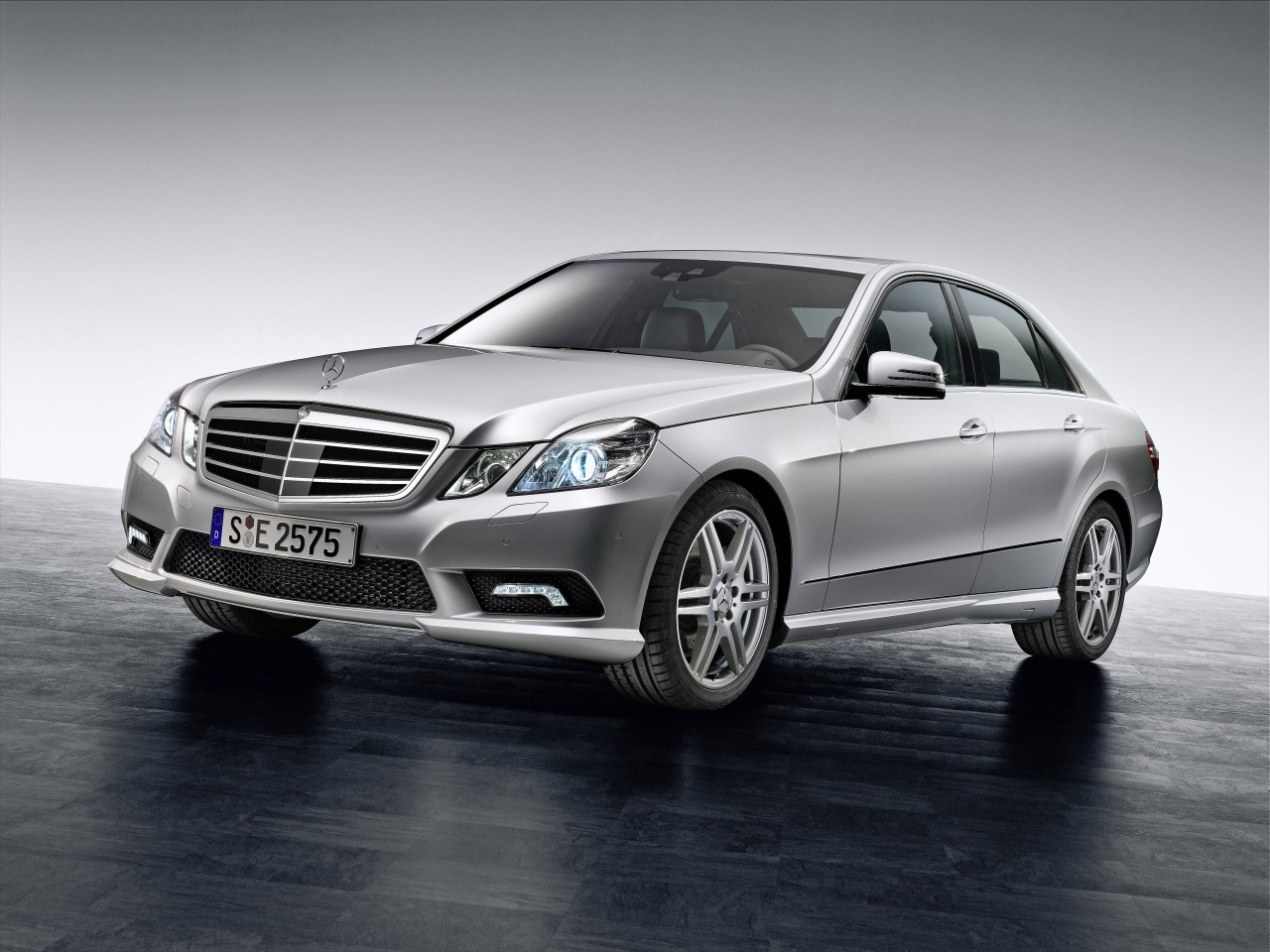
The all-new Mercedes-Benz E-Class will be in India very soon...
Mercedes-Benz plans to invest around Rs 4,780 crore towards increasing production capacity of trucks, at its plant in Chennai. However, the time frame for this proposed investment has not been announced by the company yet.
Mercedes, which produced about 4,000 units in India last year, is currently witnessing a slowdown in sales in the country. The German luxury car manufacturer sold only 1,500 units in the country during January-June 2009 and hopes to improve its performance in the second half. The new E-Class luxury saloon, which is due to be launched in India very soon, is expected to provide a fillip to M-B sales in the country.
Monday, July 20, 2009
Mercedes-Benz to offer smaller, more fuel-efficient engines on the new E-Class

In Europe, the new Mercedes-Benz E-Class will be offered with small, four-cylinder petrol and diesel engines. Performance will, of course, take a back seat to fuel economy...
Mercedes-Benz has announced it will be offering two new engines that are smaller and more fuel-efficient, on the E-Classis. These four-cylinder diesel and petrol engines will be offered on the E200 CDI and CGI BlueEFFICIENCY models. With 136bhp from the 2,134cc diesel engine and 184bhp from the 1,800cc petrol, these engines are likely to offer less than stellar drivability, but will offer outstanding economy – 19km/l for the diesel and 14km/l for the petrol.
‘Sophisticated, efficient four-cylinder engines make for lower fuel consumption and less environmental pollution without having to compromise on classic Mercedes attributes such as ride comfort and driving enjoyment,’ says a Mercedes-Benz press release.
Whether Mercedes-Benz also offers these four-cylinder engines in India on the new E-Class, when the car goes on sale here in the next 2-3 months, remains to be seen.
Saturday, July 18, 2009
Mercedes-Benz SLS AMG: The electric supercar is coming…

The lithium-ion battery-powered Mercedes-Benz SLS AMG should be ready by next year and will provide performance that's on a par with its IC-engined brother
Mercedes-AMG has made an official announcement regarding the new electric SLS, which will be the company’s first battery-powered supercar! Instead of the regular SLS AMG’s 6.3-litre V8, the electric version will be fitted with four electric motors, which together produce 530 horsepower and 880Nm of torque.
The SLS AMG’s motors will be located near the car’s wheels, with each motor delivering power to an individual wheel, thus making for a very effective all-wheel-drive system. The car’s motors will be fed by a liquid-cooled high-voltage lithium-ion battery with an energy content of 48kWh and a capacity of 40Ah. The 400-volt battery is charged by means of targeted recuperation during braking whilst the car is being driven. The performance target for the battery-powered SLS are zero to 100km/h in four seconds.
‘With the SLS AMG with electric drive, we wanted to redefine the super sports car. For us, it is not just about responsibility. We attach just as much importance to excitement and classic AMG performance,’ says Volker Mornhinweg, CEO, Mercedes-AMG GmbH. Deutsche Accumotive GmbH & Co. KG, a joint venture between Daimler AG and Evonik Industries AG, will provide the battery technology needed for the SLS AMG. Daimler has the leading role in this joint venture for the development and production of batteries and battery systems for automotive applications.
We expect to see the production version of the electric SLS AMG by end-2010.
Wednesday, July 8, 2009
Mercedes-Benz launches folding bike for urban commuters


A Mercedes-Benz for just Rs 86,000...
If you drive around in an E280, you can’t possibly buy just any old bicycle for your school/college-going kid. Indeed, what you must get for him/her is Mercedes-Benz’s latest folding bike, which should be just perfect for a spot of commuting in the city.
The Mercedes-Benz bike, which costs the equivalent of Rs 86,000 in Europe, is fitted with an eight-speed sequential ‘clutchless’ transmission from Shimano, powerful disc brakes all-round and fully independent front and rear suspension. According to a press release from Mercedes-Benz, ‘The folding bike is perfect for the urban commuter, or the non-driver who has always hankered after something bearing the three-pointed star.’
The bike’s folding mechanism is easy to operate and takes just a few seconds, and there are two different folded positions for maximum convenience. When in the completely folded down position, the bike measures just 80x80x35cm and can easily be stored in the boot of a car.
Since it’s a Mercedes-Benz product, the folding bike comes with lots of high-spec bits – an adjustable gel saddle, Continental tyres with reflective side walls, folding pedals, sprung-flick bell, a protective fabric cover bag and even a luggage rack for added practicality.
Want one for yourself or your kid? Pedal down to your friendly neighbourhood M-B dealership and ask them to import one for you now!
Thursday, July 2, 2009
Mercedes-Benz Fashion Week kicks off in Berlin

Photographer Peter Lindbergh created these visuals with the beautiful new Mercedes-Benz E-Class Coupé along with Mercedes-Benz's fashion brand ambassador, Julia Stegner. Dresses for Ms Stegner and other models were provided by fashion label Escada


The fifth edition of the Mercedes-Benz Fashion Week kicked off in Berlin yesterday, and will conclude on Saturday, the 4th of this month. The first two days of what’s said to be Germany’s most important fashion event saw a unique fusion of fashion and automobiles.
DTM racing driver Susie Stoddart drove in with Mercedes-Benz fashion brand ambassador Julia Stegner, in the SLR Roadster, to the red carpet at Berlin’s famous Bebelplatz. ‘I think it’s fantastic that Mercedes-Benz, as part of its worldwide fashion activities, gives outstanding talents from domestic markets the chance to present their fashions on a major international runway,’ said Stegner.
Among the various activities at the Fashion Week, Gorden Wagener, head of Mercedes-Benz design, showed how modern automotive design works. At the Mercedes-Benz designo stand, Wagener’s team of designers created a likeness of the new E-Class Coupé by arranging strips of coloured adhesive tape on a large display. Similar to the sketches and patterns employed in fashion design, the so-called tape technique is a creative process used to develop forms and silhouettes for new vehicles.


Ever since the debut of Mercedes-Benz Fashion Week Berlin in July 2007, Mercedes-Benz designers have been on hand to demonstrate in person how the design of a new vehicle is created.
Star photographer Peter Lindbergh created an impressive montage of visuals with the beautiful new E-Class Coupé along with Julia Stegner, wearing an exclusive evening dress by Escada, and a bevy of other models. The visuals will later be used in various marketing and promo campaigns for the E-Class Coupé, which, unfortunately enough, isn’t very likely to come to India.
Still, enjoy the pics and watch the video below to get a glimpse of what one of Germany’s best fashion shows looks like!
Highlights of the ongoing 2009 Mercedes-Benz Fashion Week at Berlin
17 Agustus 2009
Mercedes-Benz Citaro FuelCELL Hybrid bus makes its world premiere in Vienna

The new Mercedes-Benz Citaro FuelCELL Hybrid city bus
Mercedes-Benz is celebrating the world premiere of its new Citaro FuelCELL Hybrid city bus at the Union Internationale des Transports Publics (UITP) World Congress and Mobility and City Transport Exhibition in Vienna. The first vehicle in Daimler’s new generation of fuel-cell buses, the Citaro FuelCELL Hybrid combines the advantages of the diesel-electric Citaro G BlueTec Hybrid with those of the hydrogen-powered Citaro fuel cell buses, which have delivered impressive performance in fleet tests.
The Mercedes-Benz Citaro FuelCELL Hybrid runs without emitting any pollutants and is virtually silent, making it ideal for use in highly congested inner cities and urban areas. ‘As the world’s largest bus manufacturer with a claim to technological leadership, we always strive to be at the forefront of developments leading to zero-emission local public transportation,’ says Hartmut Schick, Head of Daimler Buses.
The Mercedes-Benz Citaro FuelCELL Hybrid was developed within the framework of Daimler’s global commercial vehicle initiative, ‘Shaping Future Transportation.’ The initiative is to be aimed at using clean, efficient drive systems and alternative fuels to make zero-emission commercial vehicles a reality in the future. ‘Our new fuel cell hybrid bus is the next step on the road to zero-emission transportation. The objective of this development is to emphasize our technological leadership on a sustained basis,’ says Schick.
Daimler Buses will produce a small batch of about 30 vehicles of this new generation of fuel cell buses this year, and offer them to European mass transit companies. Someday – hopefully within the next 5-7 years – we hope such buses will also come to the Indian market!
Mercedes-Benz unveils special edition SLK 2LOOK for Europe


The limited edition Mercedes-Benz SLK 2LOOK looks... good?
Mercedes-Benz has launched the limited edition SLK 2LOOK coupe-convertible in the UK. The company will produce only 150 units of this limited edition variant, which will only be available in either white or black. The very well appointed car gets 18-inch alloy wheels, black and white nappa leather upholstery, velour floor mats, heated seats, a special neck-level heating system (designed for open top motoring) and 2LOOK badges.
The SLK 2LOOK will be powered by Mercedes-Benz’s supercharged 1.8-litre Kompressor engine and in the UK, the car will cost £31,235 (Rs 24 lakh) OTR.
17 Agustus 2009
Mercedes-Benz releases details on the 2009 S-Class

The 2009 Mercedes-Benz S-Class will be in India very soon...
With 270,000 units sold worldwide since its market launch in 2005, the W221-series Mercedes-Benz S-Class is one of the world's most successful luxury saloons and the 2009-spec model has been significantly improved in the areas of fuel efficiency, chassis dynamics, handling, performance and safety.
The 2009 Mercedes-Benz S-Class lineup includes six petrol and diesel engines, all of which offer lower fuel consumption and lower emissions. With an average fuel consumption of around 15km/l, the S350 CDI BlueEFFICIENCY is now one of the most fuel efficient models in the luxury segment.
The list of safety features on the S-Class lineup is almost endless – there are things like Adaptive Highbeam Assist, Lane Keeping Assist, Night View Assist PLUS and Attention Assist – all of which are driver-focused technologies that boost the cars’ safety factor.
The S-Class’ design has also been given a minor facelift, with a more pronounced ‘arrow-shape’ radiator grille, LED light package, a new front bumper and exhaust tailpipes integrated into the rear bumper. The headlamps now have bi-xenon technology as standard.
Many of the S-Class’ new features will also be available on the new Mercedes-Benz E-Class lineup. The 2009 Mercedes-Benz lineup will be launched in India over the next 6-12 weeks.
17 Agustus 2009
Production-ready Mercedes Benz ML450 Hybrid to be unveiled at New York Auto Show

The ML450 Hybrid has batteries and electric motors to go with its 3.5-litre V6, so you can feel a bit less guilty about driving a big, fat SUV...
Mercedes-Benz will officially unveil the all-new ML450 Hybrid at the New York Auto Show next week. This high-tech SUV is the first Mercedes-Benz production vehicle which will be fitted with a new version of the two-mode hybrid system (where the electric motors are paired with a continuously variable transmission), which was co-developed with General Motors, Chrysler, and BMW.
Mercedes-Benz will manufacture the new two-mode hybrid system that it will use on the ML450 and also supply this hybrid system to BMW, which the latter will use on the upcoming X6 hybrid.
The ML450 Hybrid gets a 3.5-litre V6, which, along with the electric motors, produces a total of 335 horsepower. The vehicle can run in electric-only mode and the V6 kicks in automatically while accelerating hard, climbing steep inclines or in any other situation where more power is needed.
The ML450 Hybrid will first be launched in European and North American markets, but could also come to India and elsewhere in Asia by 2010-11.
17 Agustus 2009
Mercedes-Benz Citaro G BlueTec hybrid bus being tested in Europe

Mercedes-Benz, which stepped into the luxury bus segment in India last year, has now started testing its newest hybrid bus in Europe. The German company is currently showing the Citaro G BlueTec, an 18-metre articulated city bus with a series hybrid drive system.
The Citaro G BlueTec is fitted with the world's biggest lithium-ion battery pack, which powers the four electric motors mounted in the wheel hubs, and a 4.8-litre diesel engine, which is much smaller than the 12-litre engine usually fitted to a bus of this size. The lithium-ion battery pack provides enough power for the electric motors to produce a total of up to 320kW, which is quite adequate for the Citaro G, even under heavy load conditions.
The battery pack is charged by the diesel engine (which does not actually power the bus – it’s only there to charge the Li-ion battery pack) as well as via regenerative braking. As a result of the hybrid drivetrain, the Citaro G’s diesel consumption and CO2 emissions are reduced by 30% as compared to a conventional bus of its category.
According to Mercedes-Benz, the new hybrid bus has already completed extensive practical trials over recent months, including several weeks of winter trials under extremely tough operating conditions near the Arctic Circle. The first of these hybrid vehicles will be delivered to transport operators before the end of this year.
Mercedes-Benz expects to sell about 300 units of its new hybrid bus, per annum, in Western Europe. Via its Orion brand, the company already has 1,700 hybrid buses running in North America and demand is expected to increase over the coming months.
For now, hybrid buses like the Mercedes-Benz Citaro G BlueTec are likely to be prohibitively expensive for the Indian market. However, as costs come down and EV technology becomes more accessible over the next 3-5 years, we can also expect to such buses coming to India in due course of time.
17 Agustus 2009
Mercedes-Benz 2009 M-Class SUVs launched in India

The 2009 ML320CDI and ML320 are now in India, priced at Rs 54 lakh
Mercedes-Benz India has launched 2009-spec M-Class SUVs in India. With styling updates, a host of news gizmos and cutting-edge automotive technologies, the new M-Class is said to be much improved over the earlier model.
Mercedes-Benz is offering two M-Class variants in India – the ML320CDI (diesel) and the ML350 (petrol), with both vehicles priced at Rs 54 lakh, ex-showroom Mumbai.
Apart from lining up new launches, Mercedes-Benz India is also upping the ante in other areas, in a bid to make sure it keeps its nose ahead of Audi and BMW. The German luxury carmaker plans to increase the number of engineers working at its R&D centre in Bangalore from the current 200 to anywhere from 500-1,000 over the next few years. The company also plans to invest up to Rs 150 crore in the near future, towards expanding its distribution network and opening new showrooms in the country.
18 Agustus 2009
Mercedes-Benz’s new manufacturing facility inaugurated at Chakan, Pune

Mercedes-Benz remains confident of its growth prospects in India
Mercedes-Benz, which has already been manufacturing cars in India since 1994, has now inaugurated its new manufacturing plant at Chakan, Pune. Completed in about 13 months from the date when construction began, the plant is spread over 100 acres of land and has independent facilities for the assembly of cars and commercial vehicles.
To begin with, Mercedes-Benz C, E and S-Class cars will be manufactured at the new plant at Chakan, though other models may also be made here in the future. ‘As the Plant Manager of the largest Mercedes-Benz plant in Sindelfingen, Germany, I am impressed by the flexibility and the potential for expansion of this facility. It was created with a long-term perspective in mind and I am sure that we will see many new products roll off the assembly line, both from the passenger car and the commercial vehicle segments,’ says Dr Eberhard Haller, Director of the Board, Mercedes-Benz India.
Mercedes-Benz, which sold just 600 cars in India 1999, has grown consistently over the years, selling 3,600 cars in the country in 2008. Despite other German luxury carmakers like Audi and BMW coming to India, Mercedes-Benz remains confident of its growth prospects in the country and is committed to rolling out new models and variants every year to suit market requirements in India.
18 Agustus 2009
Mercedes-Benz celebrates 30th anniversary of the G-Class


The 2009 Mercedes-Benz G-Class, perhaps the best off-roader in the world...
While it’s not available yet in India, the Mercedes-Benz Geländewagen – or the G-Class as it’s now called – is widely regarded as one of the best off-roaders in the world. First unveiled in 1979, the G-Class has completed 30 years now, with Mercedes-Benz having sold more than 200,000 units of this vehicle worldwide.
With its production span of 30 years (and counting…), the G-Class is the longest-serving passenger car series in the 120-year history of Mercedes-Benz. And with its permanent all-wheel drive, electronically controlled 4ETS traction system, low-range gearbox and three selectable differential locks, the G-Class shows that lesser SUVs – including Mercedes-Benz’s own M-Class – have a long way to go before they can come anywhere near to equalling its off-road prowess.
Development work on the Geländewagen began in the early-1970s, in a cooperation agreement between Daimler-Benz (of Germany) and Steyr-Daimler-Puch (of Austria). In fact, the G-Class is the only Mercedes-Benz vehicle that’s only made in Graz, in Austria, where it’s assembled by hand. The vehicle is currently available in three body variants – short-wheelbase station wagon, long-wheelbase station wagon and convertible. The range of engines available includes a common-rail diesel V6, a normally aspirated petrol V8 and a supercharged petrol V8.
Celebrating the 30th anniversary of the G-Class, Mercedes-Benz is offering to special edition variants of the G-Class – the EDITION30 and EDITION30.PUR – which can be equipped with a full range of off-road options, including special wheels and tyres, protective grilles for the headlamps and lights, a walk-on bonnet for easier access to the optional roof-rack, a towing lug at the front and a two-section rear door. The interiors come equipped with hard wearing materials that are fully washable.
What a pity then that Mercedes-Benz India says it has no plans to import the G-Class to India in the foreseeable future…
19 agustus 2009
Mercedes-Benz to launch limited-edition Maybach Zeppelin

For a mere Rs 3 crore (plus import duties), you can have the world's most ostentatious luxury car - the Maybach Zeppelin 62


According to the sales and marketing wizards at Mercedes-Benz, this is apparently the right time to announce a limited-edition variant of the world’s most ostentatious luxury car. Hence, the German carmaker has announced the Maybach Zeppelin, which will make its official debut at the upcoming Geneva Motor Show this year.
According to Mercedes-Benz, the new Maybach Zeppelin will be a worthy successor to the 1930s car of the same name, which was the company’s top-end luxury model at that time. The new car would, of course, feature the highest quality paint and the best materials, and only 100 cars will be built for worldwide distribution.
The Maybach Zeppelin will be fitted with Mercedes-Benz’s 6.0-litre twin-turbo V12, which produces 640 horsepower and 1,000Nm of torque – perfect for trundling down to the supermarket to buy some bread and cheese, we suppose.
Actually, forget the badges, the high-gloss piano lacquer trim, the California beige leather and the genuine lambskin carpets. What you really need to know abut the Zeppo is that it costs US$600,000 – that’s about Rs 3 crore at today’s exchange rates. Factor in the import duties this car would attract in India and you’re looking at a sum that would buy you a sea-view apartment on Marine Drive, in Mumbai, with enough change still left over for a Mercedes-Benz S-class...
19 Agustus 2009
2010 Mercedes-Benz E-Class: First official pictures

The all-new 2010 Mercedes-Benz E-Class should be launched in India within the next 6-8 months...


Pics: Autoblog
Mercedes-Benz has finally unveiled the 2010 E-Class, at a private event in Detroit. The car, which will be publicly unveiled in March this year, at the Geneva Motor Show, features major changes inside and out and is a major departure from the current E-Class’ styling.
The 2010 E-Class’ styling is inspired by the Mercedes-Benz conceptFASCINATION, which was shown last year. Apart from the obvious changes to the sheetmetal and the headlamps, the new E is bigger than the current model – overall length has gone up by half an inch, width has grown by 1.26 inches, the wheelbase has increased by 0.8 inches and the height has gone up by 0.5 inches.
The new shape is said to be more aerodynamic, torsional rigidity is said to be up by 30% and since the new E packs no less than 11 airbags as standard equipment, it should be safer in a crash. The car will also feature a host of new safety gadgets like Attention Assist, Lane Departure warning system, adaptive high-beam headlights, radar-based cruised control, blind spot monitoring and infrared night vision.
We expect the new E-Class to go on sale in India during the last quarter of 2009, with petrol and diesel engine options available as usual. You’ll have to wait for the official pricing details, but do expect the new E to be around 10-15% more expensive than the current model.
20 Agustus 2009
Mercedes-Benz unveils CLS Grand Edition

We think the new Mercedes-Benz CLS Grand Edition looks very, very cool...


The current Mercedes-Benz CLS – the car which started the ‘four-door-coupe’ trend that’s now catching on in a big way – is due to be replaced with an all-new model in 2010. So, as is now de-rigueur with most car manufacturers these days, the company is doing a special edition variant before it finally bids goodbye to the current model CLS.
Called the CLS Grand Edition, the new variant features special scratch-resistant matt-finish paint (choose from obsidian black, iridium silver, carneol red or flint grey), high-grade leather interiors, high quality wood trim, bi-xenon headlamps with dark headlamp casings, active light function and cornering light function in the fog lamps, headlamp cleaning system, 18-inch 5-spoke AMG alloy wheels shod with 245/40 R18 (front) and 275/35 R 8 (rear) tyres, and ‘Grand Edition’ insignia on the front wings.
The CLS Grand Edition will be available with a range of powerful and refined V6 engines, but the car is only for Europe, so don't expect to see one of these at your friendly neighbourhood M-B dealership...
20 Agustus 2009
2010 Mercedes-Benz E-Class pics leaked


No matter how hard carmakers try, pictures of their new cars inevitably get leaked out much before the official launch. And given the ubiquitous Internet, those pics are then immediately distributed around the world…. so, here are ‘spy pics’ of the 2010-model Mercedes-Benz E-Class, which is slated to make its official debut at the 2009 Detroit Auto Show in January, or at the 2009 Geneva Motor Show in March.
The current E-Class’ oval, quad headlamps have been replaced with sharp, angular units, and the overall styling seems much influenced by the current Mercedes S-Class. When it arrives in India next year, expect the E-Class to be loaded with technology and cutting-edge safety features.
20 Agustus 2009
Delphi's Direct Acting Piezo injector to be first used on the Mercedes-Benz C250 CDI
Delphi claims its new DA Piezo injector is a major breakthrough in diesel engine tech

The US-based automotive components manufacturer, Delphi has announced that the company’s new Direct Acting Piezo injector will first be used on the Mercedes-Benz C250 CDI.
Delphi claims that its DA Piezo injector represents a radical break-through in common-rail diesel engine technology, as the injector needle is directly activated by the Piezo stack (instead of being moved via an electro-hydraulic circuit, as with existing fuel injection technologies), removing the lag and energy consumption associated with the use of electro-hydraulic circuits.
The company claims this new technology, which makes for more accurate and consistent fuel delivery, will allow carmakers to comply with new emission legislations, while also providing more power and better fuel economy.
‘Delphi has surpassed a major milestone in diesel technology history and there is no better way to write this new chapter than to be partnered with Mercedes-Benz, the company with the industry's longest history in diesel engines,’ says Jose Avila, general manager, Delphi Diesel Systems.
20 Agustus 2009
Mercedes-Benz unveils its AMG range for India
BMW sales up 14% in India, during January-July 2009

BMW plans to launch the Z4 coupe-convertible in India by October/November this year. An absolutely brilliant sportscar, the Z4 will be priced at more than Rs 40 lakh
BMW has reported a 14% hike in sales in India during January-July this year, at 2,008 units, as against 1,763 units during the corresponding period last year. This, according to BMW, takes it the no.1 slot (in terms of sales) in the luxury car segment in the country. Looking ahead, the company hopes to sell more than 3,000 units in India by the end of this year.
During April-July this year, BMW sold 1,016 units in India, doing better than Mercedes-Benz which could sell only 853 units in the same period. (We suspect this may have something to do with the fact that Mercedes-Benz is expected to launch its all-new E-Class sedan in India very soon, and many potential buyers would rather wait for the new version than buy the current/outgoing model…)
BMW is also looking at launching at least two new models in India before the end of this year – the 750i (petrol-engined version of the new 7 Series) and the Z4 sports coupe. To stay ahead of Mercedes-Benz and Audi, BMW, which already has 14 dealers in the country, is planning to add up to eight more dealers in India by end-2010.
Thursday, August 13, 2009
BMW ActiveHybrid X6: First pics, specs

The 2010 BMW ActiveHybrid X6. We think it's too complicated, will be hugely expensive and will not offer significant enough benefits over the conventional X6


Alongside the ActiveHybrid 7, BMW has also announced the production version of its ActiveHybrid X6, which will also make its world premiere at the Frankfurt Motor Show next month.
Billed as ‘the world's first Sports Activity Coupe with full hybrid drive,’ the ActiveHybrid X6 is fitted with a twin-turbo 4.4-litre V8 (petrol, the same engine that’s fitted to the ActiveHybrid 7) that produces 400 horsepower. The engine is mated to two electric synchronous motors, taking the car’s total power output up to 480bhp and 776Nm of torque.
According to BMW, the ActiveHybrid X6 drinks around 20% less fuel compared to a vehicle of same size/heft that’s powered by a combustion engine alone. In terms of performance, this X6 sprints from zero to 96km/h in 5.4 seconds and is electronically limited to a top speed of 208km/h.
Unlike the ActiveHybrid 7, where the electric motor is fed by a lithium-ion battery, the X6’s electric motors receive their energy from a nickel-metal hydrid (NiMH) battery pack (what, no lithium-ion battery here?!?!) that’s positioned beneath the floor of the luggage compartment. The ActiveHybrid X6 is able to run exclusively on electric power at speeds of up to 60km/h, with the combustion engine being activated automatically whenever required. In pure electric-only mode, however, range is a laughably pathetic 2.5km.
Power is transmitted via a seven-speed automatic transmission (which also allows clutchless manual shifting) and BMW's xDrive all-wheel-drive system distributes the power between the front and rear axles. Under normal conditions, xDrive distributes drive power to the front and rear axle in a 40:60 split. Sensors constantly measure wheel slip at both the front and the rear, and vary the balance of drive power within a fraction of a second when required.
The 2010 BMW ActiveHybrid X6’s pricing and availability details will be announced later.
BMW ActiveHybrid 7: First pics, specs

The 2010 BMW ActiveHybrid 7's lithium-ion battery pack (above) and the car and its advanced electric motor (below). We are witnessing the car industry going through a phase of massive change...


BMW has announced the production version of its all-new ActiveHybrid 7, which will make its world debut at the Frankfurt Auto Show (IAA) in September this year.
The BMW ActiveHybrid 7 is fitted with a twin-turbo, 4.4-litre V8 (petrol), which is combined with a three-phase synchronous electric motor for a combined power output of 455bhp and 690Nm of torque. Power is transmitted to the rear wheels via an 8-speed automatic transmission, with the electric motor positioned between the engine and the torque converter. The electric motor receives its supply of energy from a lithium-ion battery developed specifically for use in the ActiveHybrid 7.
According to BMW, the ActiveHybrid 7 will accelerate from zero to 96km/h in 4.8 seconds, hit an electronically limited top speed of 250km/h and with its auto stop-start system, offer 15% better fuel economy compared to the 750i.
BMW says it uses hybrid technology because it can make an effective contribution to the reduction of fuel consumption and emissions. ‘The savings potential of hybrid technology increases with the power of the combustion engine interacting with the system. In the case of the ActiveHybrid 7, precise coordination of the electric motor and the V8 engine serves to optimize the efficiency of the combustion engine under all operating conditions,’ says a press release from BMW.
With the production-ready BMW ActiveHybrid 7, it does seem that car manufacturers are getting increasingly serious about hybrids. Which may or may not be a good thing. We, at India Automotive, believe hybrids will ultimately prove to be a passing fad that are more trouble to engineer and build than they are worth. Full electric cars like the Nissan Leaf are more like it – that’s where the future of the automobile is likely to be. Will hybrids be able to stand the test of time? We think not!
Tuesday, August 11, 2009
A BMW fit for the President: BMW 7 Series High Security

Apart from a million other things, the BMW 7 Series 'High Security' cars also provide an option for the fitment of twin machine guns. Just in case you get stuck in a particularly nasty traffic jam... ;-))


BMW has announced two new variants of its top-of-the-range 7 Series, which should be just right for high-powered business magnates, political bigwigs and others who need very high levels of security while travelling in a car. The BMW 760Li and 750Li ‘High Security’ variants are the first cars in the world to be certified to BRV 2009 and both vehicles meet the requirements of the new ballistic protection level VR7. (Now we don't know exactly what these protection levels stand for, but we suppose the car's occupants would be safe from most types of guns, machine guns, bombs and various other firearms...)
According to BMW, ‘Both, the 760Li High Security and the 750Li High Security provide optimum safety in the individual mobility segment, in combination with unparalleled comfort of travel, superior drive technology and an abundance of innovative equipment features. The two BMW high security sedans set new standards in the protection of persons at risk while travelling in their vehicle.’
The High Security cars’ specific chassis components have been optimised to deal with the increase in weight due to armour plating. Hence, reinforced suspension, dampers and suspension strut top mountings are part of the model-specific component range.
The passenger compartment is protected by armour plating of the doors, the roof, the pillars, the front footwell and the separation wall between passenger and luggage compartments. The model-specific gap sealing ensures that critical areas such as door cut and body joint lines are safely sealed (to guard against poison-gas attacks). The sedans' undercarriage is armoured by special plating which was developed with a particular focus on maximum explosion protection. Another new development is the sedans' 6cm safety glazing. Due to its innovative structure, the multi-layer laminated glass cover provides a unique level of resistance. The window panes are covered with a polycarbonate layer on the inside in order to prevent shattered glass particles from penetrating the interior.
Despite their increased heft, the High Security cars’ driving dynamics and comfort are on a par with regular production models, claims BMW. The 760Li’s 6.0-litre V12 engine produces 544 horsepower and 750Nm of torque, while the 750Li’s 4.4-litre V8 makes 407 horsepower and 607Nm of torque. Both cars are electronically limited to a top speed of 210km/h, but the 760Li is quicker, getting from zero to 100km/h in 6.2 seconds, while the 750Li takes 7.9 seconds for the same.
The cars are available with a vast range of options, allowing customers to optimise their vehicle according to their specific needs. Apart from the usual range of electronics, gizmos and communication equipment, there is even the option to fit two machine guns in the centre console, which should give you an idea of just how serious BMW is with its High Security range of cars!
As part of its customer service for these cars, BMW also offers special driver training programs for its High Security vehicles.
Sunday, August 2, 2009
BMW to celebrate Mini’s 50th birthday with two special-edition variants

The Mini is 50 years old this year and BMW wants to celebrate with two special-edition cars you see here - the Mini 50 Camden and Mini 50 Mayfair ...


Mini, the iconic British car brand (though it’s now owned by BMW, a German company…) will be 50 years old on the 26th of August this year. And BMW is going to celebrate by launching two special-edition variants at the upcoming Frankfurt Motor Show in September. The two special-edition cars – the Mini 50 Camden and Mini 50 Mayfair – will be present at the BMW stand in Frankfurt. Also, BMW will focus on its ‘Minimalism’ concept, which is a package of measures developed to optimize fuel consumption and to reduce emissions.
Thursday, July 30, 2009
BMW to leave F1, will focus on sustainable mobility

BMW will pull out of F1 racing at the end of the 2009 season
After Honda, it’s now BMW which has decided to leave F1. The German company will pull out of Formula 1 racing at the end of the 2009 season. ‘Resources freed up as a result are to be dedicated to the development of new drive technologies and projects in the field of sustainability,’ says a press release from BMW.
‘Of course, this was a difficult decision for us. But it's a resolute step in view of our company's strategic realignment,’ says Dr. Norbert Reithofer, Chairman of the Board of Management of BMW AG. ‘Premium will increasingly be defined in terms of sustainability and environmental compatibility. This is an area in which we want to remain in the lead. In line with our Strategy Number ONE, we are continually reviewing all projects and initiatives to check them for future viability and sustainability. Our Formula One campaign is thus less a key promoter for us.’
BMW will remain active in various other forms of motorsport, though activity is likely to be scaled back. Now, it’s all about going clean and green, so look forward to more hybrids and electric cars from BMW.
Tuesday, July 28, 2009
Isetta roped in to promote BMW Museum in Munich

The iconic BMW Isetta micro-car from the mid-1950s...


BMW’s iconic micro-car from the mid-1950s, the Isetta has now been appointed ‘welcome ambassador’ for the BMW Museum at Munich. Last week, BMW arranged for as many 7,500 of these cars, which were driven all across Munich as moving advertisements for the BMW Museum.
Built in Munich from 1955 to 1962, the Isetta came in two versions – the Isetta 250, with 12bhp, and the Isetta 300 with 13bhp. BMW built more than 160,000 units of this tiny vehicle, which has now attained cult status among motoring enthusiasts worldwide.
For more on the Isetta and other historic BMWs, visit the BMW Museum online here
The BMW Isetta ad campaign, to promote the BMW Museum
Thursday, July 2, 2009
New BMW X1 unveiled, likely to come to India by early-2010


The new X1 is BMW's smallest SAV yet...
BMW created SUV history of sorts with the X5, which was launched about 10 years ago. With 1.5 million units of the X5 having been sold over the past decade, BMW has kept the momentum going with its other SUVs and crossovers, the X3 and the X6.
Now, the German carmaker is all set to launch yet another model in the X-series line-up – the X1 – which will be its smallest SUV (or, as BMW prefers to put it, SAV – Sports Activity Vehicle) yet. The BMW X1 will be offered with a choice of diesel and petrol engines, rear- and four-wheel-drive, six-speed manual and automatic gearboxes and even stop-start technology for improved fuel efficiency.
According to BMW, ‘The design of the new X1 is stylish and sporting, yet practical. Short overhangs front and rear, typical of every BMW, ensure the best basis for optimum handling. The profile of the car belies an interior space that sees five adults seated comfortably along with their luggage.’
As with all BMW vehicles, the X1 will be offered with a wide range of optional add-ons; bits like satellite navigation systems, sports seats in Oyster Nevada leather, anthracite headlining and high-spec wood trim. The X1 will go on sale in Europe by October this year and we expect the car to come to India by early-2010. Prices are likely to start at Rs 30-35 lakh.
Saturday, June 27, 2009
BMW 740d, revised 730d announced

The new 740d is BMW's most powerful diesel-engined car ever...


BMW has announced the new 740d, its most powerful diesel-engined car ever. Also, the 730d will now be offered with a revised engine that offers better fuel economy and lower emissions.
The 740d is fitted with a 3.0-litre twin-turbo diesel engine that produces 306 horsepower and a rather more impressive 600Nm of torque, which is available from just 1,500rpm. Featuring third-generation common-rail fuel-injection system, the 2,993cc BMW engine propels the 740d from zero to 100km/h in just 6.3 seconds and on to an electronically limited top speed of 248km/h.
The revised BMW 730d (which will also be available in India) now offers 6% better fuel economy and 7% lower emissions. BMW claims the car’s performance and fuel efficiency is better than all its competitors, including the Mercedes-Benz S350CDI.
Tuesday, June 9, 2009
BMW to launch new voice recognition technology in its cars by September 2009

All you need to do is say where you want to go and what kind of music you want to listen to on the way, and your BMW will obey all your (voice) commands immediately!
Starting September this year, BMW will start offering the latest version of its voice command technology in its top-of-the-range cars. This will enable drivers to control the car’s navigation systems and infotainment functions without having to take their hands off the steering wheel.
BMW’s new voice recognition technology will make it considerably simpler for the driver to use the car’s navigation and entertainment systems. With the navigation system, users will no longer have to specify the place, street and house number etc. in individual steps. Instead, they can read out all this information in one single step and the system will be able to process the entire message all at once.
The voice command technology will also allow drivers to find whatever music they want to listen to in their car. The system would be able to recognise voice commands regarding the type of music, the name of the artist, an album or an individual title, ensuring quick and accurate access to whatever music the driver wishes to listen to.
Saturday, June 6, 2009
BMW helps out with SmartSenior project

Soon, BMW cars may be the safest option for senior citizens
The Federal Ministry of Education and Research in Germany has recently launched a research project titled SmartSenior, which is all about developing intelligent services for senior citizens, to make life easier and safer for them. Among the areas the initiative focuses on are intelligent, location-independent emergency recognition and assistance systems which allow senior citizens to feel safe and secure on the road.
BMW is now involved in the SmartSenior initiative through the development of an Emergency Stop Assistant, which enhances road safety in the event of a medical emergency. To this end, the engineers have set out to develop an assistance system which automatically activates an autonomous driving mode when it detects that the driver has a serious medical problem, and carries out a controlled emergency stop.
In simple terms, in the event of a medical emergency, the car automatically switches on its hazard warning lights and manoeuvres carefully – taking into account the traffic around it – to the outer edge of the road, before drawing to a standstill. At the same time, an emergency call is sent out containing the data required to initiate the necessary medical and traffic-related assistance measures. This enables the provision of effective emergency care tailored to the situation at hand. ‘In order to keep a limit on the variety of possible driving situations, which vary infinitely in complexity, we are developing the prototype of our Emergency Stop Assistant initially for use on motorways and sections of roads resembling motorways,’ explains a BMW spokesperson.
BMW’s emergency stop assistance system is based both on sensors designed to monitor vital data and on existing BMW ConnectedDrive assistance systems. The BMW Group has, for example, offered an emergency call function for ten years now. In addition to precise position location and information on the vehicle, since 2007, the emergency call has also included information on the accident the vehicle has been involved in. The rescue services are therefore not only able to pinpoint where the vehicle is located and to identify it by model and colour, they also have information on the number of occupants in the vehicle and the severity of any injuries.
Thursday, June 4, 2009
BMW unleashes M3 Coupé Edition

The 2009 BMW M3 Coupe Edition
As most car enthusiasts will agree, the BMW M3 has always been one of the hottest sports coupes in the world. Lightweight, powerful and deeply involving to drive, the M3 has always been a bit special and for 2009, BMW is stepping things up even further with the launch of the new M3 Coupe Edition.
The 2009 BMW M3 Coupe Edition rides 10mm lower than the standard M3 and features a dark chrome shadow-coloured kidney grille, side vents, bonnet vents and twin exhaust tailpipe. Black wing mirrors, 19-inch double-spoke light-alloy wheels in silver alloy (black gloss finish is optional) and high-gloss ‘Shadowline’ exterior trim help distinguish the new model from other BMW M3 variants. The car is available in three new colours – Alpine White, Dakar Yellow and Monte Carlo Blue.
Of course, with BMW M3s, the engine is where the action is and with the M3 Coupé Edition, things are pretty torrid in that department. The car’s 4.0-litre V8 produces 420 horsepower and 400Nm of torque, which is enough to propel the little Beemer from zero to 100km/h in just 4.8 seconds and on to an electronically limited top speed of 250km/h. All that performance doesn’t come cheap – the car costs the equivalent of about Rs 41 lakh. In India, with import duties, this could easily go up to Rs 80 lakh or more. Still interested? Start talking to your friendly neighbourhood BMW dealer now…
Saturday, May 23, 2009
BMW 5 Series Gran Turismo: Pics and details


The 5 Series Gran Turismo - the ugliest car BMW has ever built!
It seems some carmakers are right now in a race to see who can build the ugliest, most pointless car in the world, and BMW is one of the frontrunners in this race. After the ugly hatchback-SUV-estate crossover – the X6 – the German company has now come with the equally ugly 5 Series Gran Turismo. We don’t know why it looks the way it does and we doubt if anyone at BMW does, either.
‘BMW is pleased to announce the 5 Series Gran Turismo, a car which combines an understated coupé-like silhouette to the luxurious interior of a BMW 7 Series, while at the same time giving the functionality of a BMW 5 Series Touring or X5,’ says a press release from the company. We don’t really know what to make of it, except that the 5 Series GT is supposed to be a mix of most of BMW’s cars and SUVs, which definitely has to be very, very bad thing.
Like the X6, which was recently launched in India, the 5 Series Gran Turismo is also certain to come to India within the next few months. The car will be available in four- and five-seat versions and according to BMW, the vehicle’s split tailgate (which can be opened like that of a saloon as well as like that of a hatchback) will allow owners to easily stuff more luggage into the 5 Series GT’s boot.
The BMW 5 Series GT will be available in 530d (diesel), 535i (petrol) and 550i (petrol) versions and all variants will come with a very long list of high-tech gizmos and optional accessories. None of which we really care about, because we miss the days when BMW actually used to build some very good looking cars. Still, if you are looking forward to buying one of these monstrosities, be prepared to shell out Rs 50 lakh and above.
Monday, May 4, 2009
BMW puts Mini’s India launch on hold, will get into the used cars market in 2010

No, the Mini Cooper isn't coming to India this year...
Given the ongoing economic downturn, BMW has decided to wait and watch rather than launch the Mini Cooper in India this year. According to Peter Kronschnabl, President - BMW India, launching the Mini in India would mean setting up a separate chain of dealerships, since Mini Cooper and BMW are two completely different brands. The cost involved in setting up a distribution network for Mini cars in India, says Kronschnabl, will be prohibitively expensive, given the small volumes in which the car would sell.
Kronschnabl anticipates the market in India for the Mini – which could cost as much as Rs 20 lakh – may only be around 80-100 units per annum. However, he says the BMW Group will take another look at its decision regarding launching the Mini brand in India by the end of this year. BMW will also launch its used cars business in India by 2010.
Wednesday, April 15, 2009
BMW announces X5 Security Plus

The BMW X5 Security Plus - for VIPs who need protection...
BMW has announced the launch of the new X5 Security Plus, which complies with the requirements of bullet resistance class 6. This is, according to BMW, the first vehicle produced by a high-volume manufacturer which offers security against attacks where automatic weapons like the AK47 may be used.
Based on the regular X5 sports activity vehicle (SAV), the X5 Security Plus can seat up to four people inside its armoured passenger cabin. It guarantees excellent protection, including the use of high-performance steel moulded components and panels. The body features sealed joints, which also provide protection in critical areas – e.g. between doors and frames as well as between side panels and pillars – thus preventing bullet or fragment penetration, as well as security glass conceived exclusively for this bullet resistance class.
Furthermore, the BMW X5 Security Plus’ windows resist attack using clubs, crowbars etc. and feature a polycarbonate coating that protects the interior from glass shatter. An intercom system facilitates communication with persons outside the vehicle, without having to open doors or windows. The hold-up alarm ensures that windows and doors lock automatically. Acoustic and visual alarm signals are also emitted.
The X5 Security Plus is fitted with BMW’s powerful 4.8-litre V8, which produces 355bhp and 475Nm of torque – enough to propel the vehicle from 0 to 100km/h in 8.2 seconds and to on electronically limited top speed of 180km/h. The xDrive four-wheel-drive system also provides off-road capabilities and electronics like DSC stability control system improve the vehicle’s on-road driving dynamics.
BMW also provides special security vehicle driver training. These courses, which BMW has conducted for more than 20 years now, are offered at various grades, depending on the participants' previous knowledge, and are held at several different locations worldwide. These training courses are conducted by highly qualified experts. The contents range from comprehensive theoretical tuition and practical vehicle handling to instruction on tactical behaviour.
While BMW does not sell its security vehicles in India, we suppose buyers who may be interested in getting one can ask their friendly neighbourhood BMW dealer to import one via the CBU route. It’ll certainly be expensive, but for those who need that extra protection, the X5 Security Plus should be worth every penny.
Friday, April 10, 2009
V12-powered BMW 760i launched

BMW 76Oi: V12 power vs Planet Earth?
At a time when the world is talking about sustainable transport and when car manufacturers are trying to go clean, green and environment-friendly, BMW has just launched the 760i, which is powered by a 6.0-litre twin-turbo V12, mated to an all-new eight-speed automatic transmission.
The V12 fitted to the new BMW 760i produces 544 horsepower and 750Nm of torque, which we suppose everybody needs in these times of recession and economic decline. And the fuel economy figure of around 7.5km/l should also be just perfect for most people.
According to a press release from BMW, ‘The new 7 Series already sets the benchmark in luxury performance motoring, and now BMW is moving up the standard of maximum exclusivity and supremacy in this supreme class to an even higher level, following a completely new definition. The new BMW 760i and the new BMW 760Li are taking over the top position within BMW's model portfolio, representing the highest level of motoring refinement in their segment.’
All right, we’re sure this new BMW would be a marvel of engineering and will feature a full complement of cutting edge automotive technologies. However, it’s ironic that this car is being launched at a time when some so-called automotive experts in the West are raising concerns about the Tata Nano – a tiny little hatchback fitted with a 0.6-litre, two-cylinder engine – raising pollution levels in the world.
Really, the age of V8 and V12 powered family sedans is so over. We wonder why BMW isn’t working on cars like the Toyota Prius and Honda Insight…
Friday, February 27, 2009
BMW inches ahead of Mercedes-Benz in India

The 3-series is one of BMW's bestselling cars in India
Even though Mercedes-Benz has had more than a decade’s head start in the Indian market, BMW has moved ahead of its rival decisively, selling 270 cars in January this year, compared to the 170 units sold by Mercedes-Benz in the same period.
BMW registered a 125% growth in sales last year, selling 2,908 cars in 2008 as compared to 1,293 cars in 2007. The company now assembles its 3- and 5-series cars in India, at its facility near Chennai, and these cars account for around 80% of BMW’s sales in the country. BMW imports the 7-series luxury sedan and X3 and X5 SUVs as CBUs, since these are low volume sellers. The recently introduced X6 coupe-SAV crossover will also be imported as a CBU.
BMW expects the Indian luxury car market to pick up during the second half of 2009 and the company expects to see 15-20% growth in sales this year.
Thursday, February 26, 2009
BMW X6 launched in India

The product guys wanted a coupe, the marketing guys wanted an SUV and the boss' daughter wanted an SAV, so they all settled on this. The X6 looks just terrible!
BMW India has launched the new X6 in India, with prices pegged at Rs 83 lakh for the xDrive50i (petrol) and Rs 66 lakh for the xDrive30d (diesel) variants. The BMW X6 is probably the first BMW that doesn’t know whether it wants to be a sedan or an SUV – the styling, which is a confusing mix of the two, is neither here nor there.
According to BMW, the X6 has the driving dynamics of a sports coupé and the multiple abilities of a sports activity vehicle (SAV), though we suspect that’s just marketing/PR-speak. Still, if you have a very large wad of cash which you want to blow on the ugliest BMW ever made, the X6 is waiting for you at your friendly neighbourhood BMW dealership…
Thursday, January 22, 2009
Fifth-generation BMW 7 Series launched in India

The all-new BMW 7 Series is in India, priced at close to Rs 1 crore!
BMW has launched the fifth-generation 7 Series in India. The car, which is a rival to cars like the Mercedes-Benz S-class and Audi A8, will be available in three variants in India – the 730Ld, 740Li and the 750Li.
The new BMW 750Li will be available in India right away, while the 740Li and 730Ld will go on sale by mid-2009. The 750Li will be priced at Rs 93.30 lakh, ex-showroom, and will be absolutely packed with safety, handling and performance enhancing technologies. For details on most of these technologies, see here
Moving on from the 7 Series, BMW is also looking at various other new launches in India this year, including the new 3 Series sedan, a diesel variant of the X3 SUV and the X6 SUV-sedan crossover. The German car manufacturer will also start sourcing automotive components from India in a bigger way, for its global operations. BMW is now in the process of identifying vendors who can supply high-quality components for BMW and Mini cars, as well as for BMW motorcycles.
Wednesday, December 17, 2008
BMW reports 100% growth in sales in India in 2008

Recession? For BMW, certainly not!
While the worldwide economic slowdown has brought many carmakers to their knees, that’s certainly not the case with BMW – at least not in India. The German company says it has recorded a 100% growth in the sales of its cars here in 2008. BMW, which had already delivered 2,700 cars in India by the end of November this year, plans to get to the 2,800 figure by the end of this month.
Given that BMW had only sold 1,387 cars in India last year, the above figures are certainly commendable. And while the company does expect sales to dip in 2009, it still plans to increase its dealership network, spreading to relatively smaller cities like Ludhiana, Bhubaneshwar, Jaipur and Coimbatore.
BMW’s plant in Chennai has an annual production capacity of 3,000 cars per annum, running a single shift, and the company is prepared to expand capacity if needed.
Langganan:
Postingan (Atom)


